





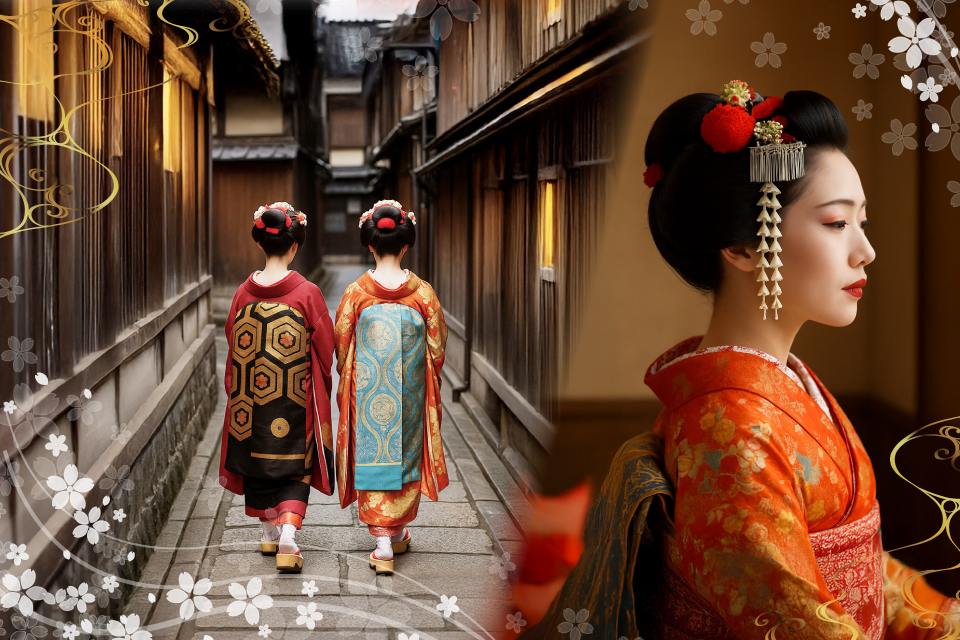
Geisha are professional Japanese entertainers trained in traditional arts—not courtesans or prostitutes.
The word geisha (芸者) literally means “person of the arts.” Geisha culture remains active in Japan today, particularly in Kyoto, Tokyo, and Kanazawa, and international visitors can experience it through performances, cultural programs, and privately arranged gatherings.
This guide explains what geisha actually do, how geisha differ from geiko and maiko, their history, common misconceptions, and how visitors can respectfully experience this living tradition.
- What a geisha is, what the word means, and what geisha actually do
- How geisha, geiko, and maiko differ
- How geisha train and develop their artistic skills
- Why geisha are sometimes confused with oiran or courtesans
- How visitors can experience geisha culture in Kyoto, Tokyo, and Kanazawa
- How to book a geisha experience, what it can cost, and what etiquette to know
What Is a Geisha in Japan?
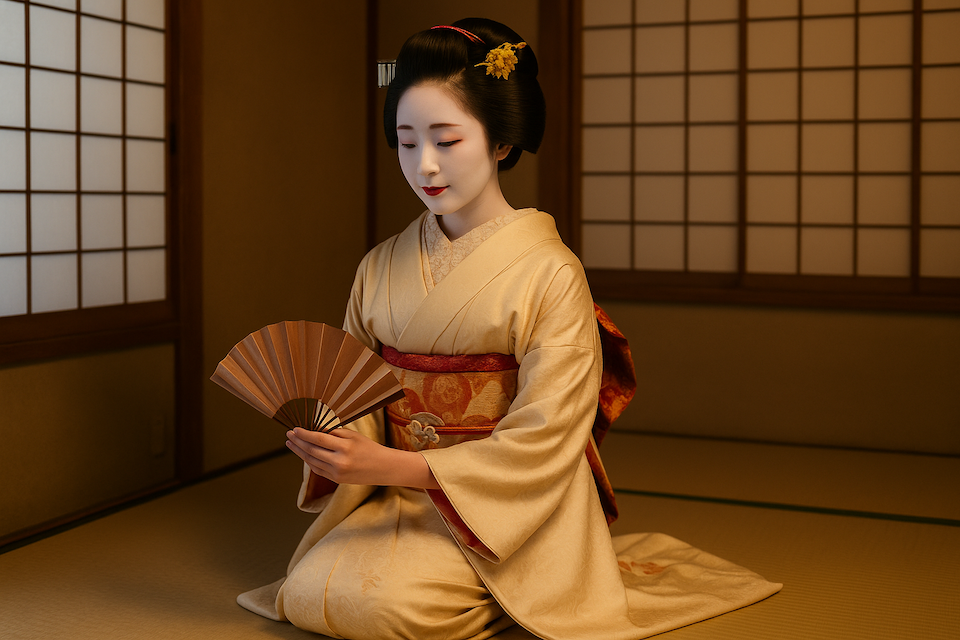
A geisha is a professional entertainer trained in traditional Japanese performing arts and hospitality. Geisha have historically worked in kagai or hanamachi—traditional entertainment districts where they perform and entertain guests at teahouses and restaurants.
What Does “Geisha” Mean?
The Japanese word geisha combines gei (芸), meaning “art” or “performance,” and sha (者), meaning “person.” It can therefore be translated literally as “person of the arts.”
This meaning is important because the profession is defined primarily by artistic skill, not by the distinctive kimono and white makeup often associated with geisha in popular culture.
What Does a Geisha Actually Do?
Geisha may train in traditional dance, shamisen, singing, and other performing arts. At an ozashiki, or traditional banquet, they entertain guests through performances, conversation, hospitality, and traditional party games known as ozashiki-asobi.
The exact traditions differ by region and individual. What they have in common is that becoming a geisha requires extensive training, and professional geisha continue to refine their arts throughout their careers.
What Is the Difference Between Geisha, Geiko, and Maiko?
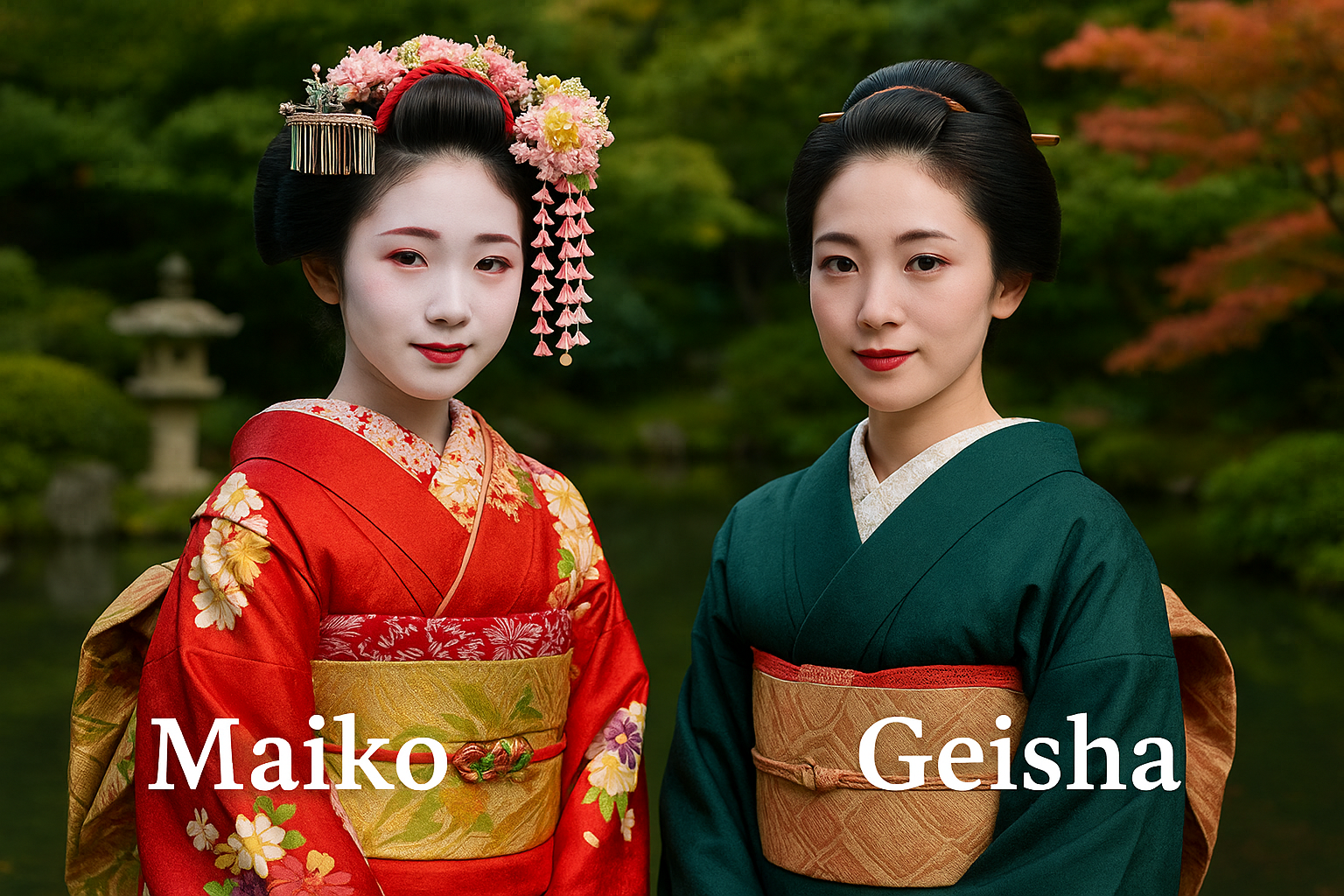
The terms geisha, geiko, and maiko are closely related, but they do not mean exactly the same thing.
| Term | Meaning | Career Stage | Common Usage |
|---|---|---|---|
| Geisha | Professional traditional entertainer | Fully trained | General term across Japan |
| Geiko | Kyoto term for a professional geisha | Fully trained | Kyoto |
| Maiko | Apprentice training to become a geiko | Apprentice | Most strongly associated with Kyoto |
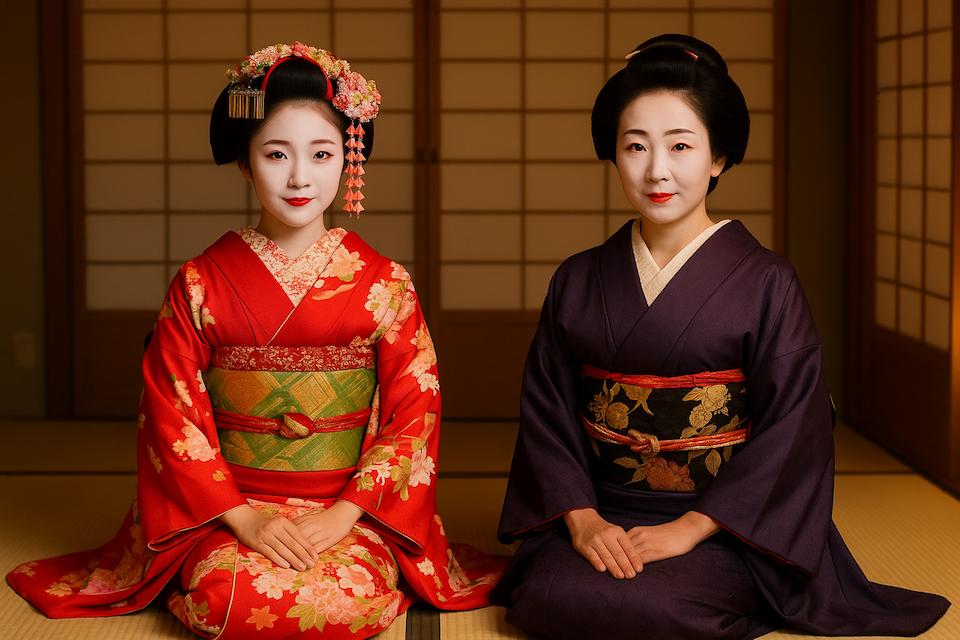
In Kyoto, fully trained professionals are generally called geiko, while maiko are apprentices who are still developing their artistic and hospitality skills.
How Can You Tell a Maiko from a Geiko?
One of the easiest differences to notice is their appearance.
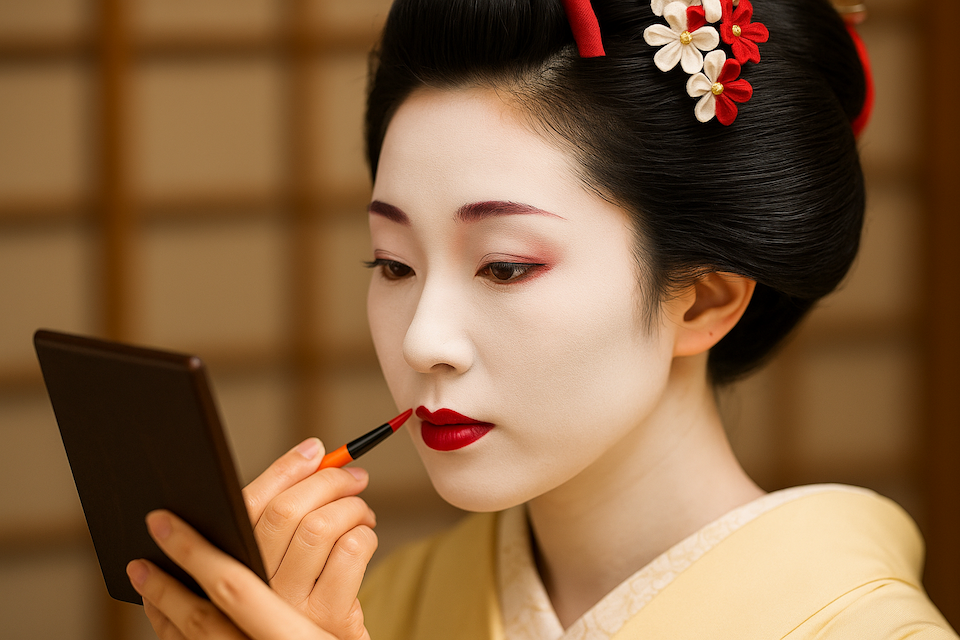
Maiko generally wear more colorful kimono, long darari obi, seasonal kanzashi hair ornaments, and tall wooden okobo footwear. They traditionally style their own hair.
Geiko usually have a more understated appearance, with simpler kimono and hair ornaments. They generally wear wigs and lower zori footwear.
These differences reflect their stage of professional development: the elaborate appearance of a maiko is associated with apprenticeship, while geiko typically adopt a more restrained style after completing that stage.
How Does Someone Become a Geisha?
Training systems vary by region, but Kyoto is particularly known for its structured maiko-to-geiko tradition.
Apprentices learn much more than dance or music. Their training can include traditional performing arts, manners, conversation, dress, and the customs of the ozashiki. They learn within the culture of the hanamachi before progressing toward professional geiko status.
Becoming a geiko does not mark the end of training. Professional performers continue studying and refining their arts throughout their careers.
Do Geisha Still Exist in Japan Today?
Yes. Geisha culture remains active in Japan today.
Professional geisha—including performers known regionally as geiko or geigi—continue to practice traditional arts and entertain guests in historic entertainment districts.
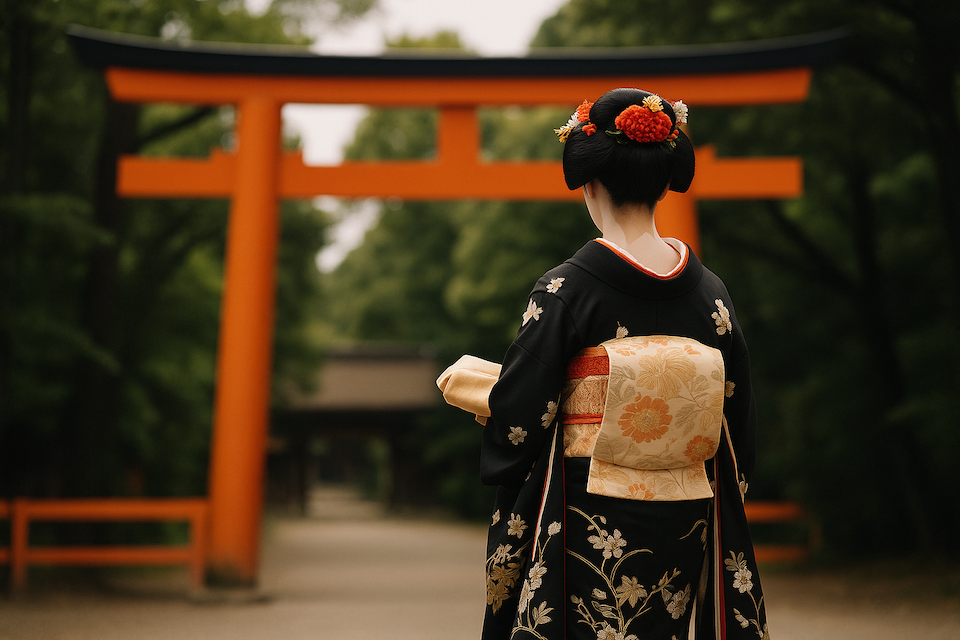
Kyoto remains particularly well known for its geiko and maiko communities. The city has five active kagai: Gion Kobu, Miyagawacho, Pontocho, Kamishichiken, and Gion Higashi. Active geisha traditions can also be found in cities such as Tokyo and Kanazawa.
Although the profession is much smaller than it was historically, geisha culture is not simply a recreation of the past. It remains a living tradition practiced by professional performers today.
Are Geisha Prostitutes? Common Misconceptions Explained
No. Geisha are professional entertainers and artists, not prostitutes.
Their profession centers on traditional performing arts, entertainment, conversation, and hospitality. The misconception largely comes from confusion between different professions in Japan’s historical entertainment and pleasure districts, as well as later portrayals of geisha outside Japan.
Geisha vs. Oiran: What Is the Difference?
Geisha and oiran historically performed different roles.
Oiran were high-ranking courtesans associated with licensed pleasure districts during the Edo period. Geisha developed as professional entertainers whose work centered on artistic performance and social entertainment.
Their elaborate historical clothing and makeup can make them appear similar to unfamiliar viewers, but the professions were distinct.
Today, visitors may encounter oiran-style costume and photography experiences in Japan. These are different from meeting a working geisha, geiko, or maiko.
Why Are Geisha Often Misunderstood Outside Japan?
International perceptions of geisha have been shaped by historical encounters, popular fiction, film, and other media that sometimes blurred the distinction between geisha and courtesans.
Works such as Memoirs of a Geisha have also contributed to international interest in the profession while creating debate about how geisha traditions are represented.
For modern visitors, the key distinction is simple: geisha are trained performing artists whose profession centers on entertainment and hospitality.
A Brief History of Geisha in Japan
The recognizable geisha profession developed during the Edo period (1603–1868), alongside Japan’s teahouses, restaurants, entertainment districts, and performing arts.
Interestingly, some of the early professional entertainers associated with this tradition were men. Entertainers known as hōkan or taikomochi entertained guests through music, storytelling, humor, and conversation.
Female geisha later became increasingly prominent and eventually came to dominate the profession. They developed a professional identity centered on performance and entertainment that was distinct from that of courtesans.
As Japan modernized during the Meiji era and experienced major social changes during the 20th century, geisha communities also changed. Their numbers declined substantially, but the profession survived.
Today, geisha communities continue to preserve regional performing arts and hospitality traditions while adapting to modern Japan.
Can Tourists Meet Geisha in Japan?
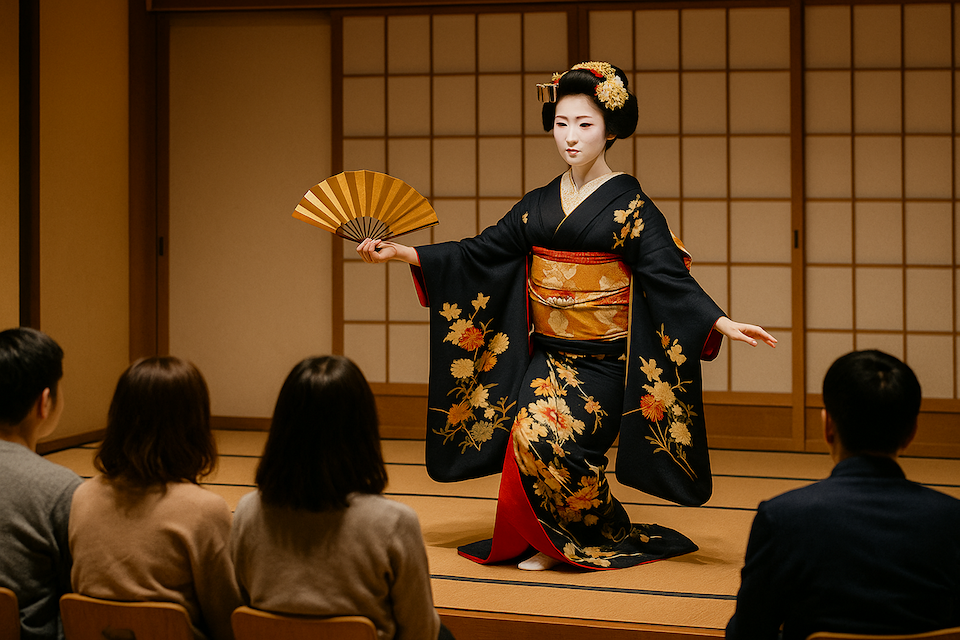
Yes. International visitors can meet geisha, geiko, or maiko through organized experiences and performances.
Trying to approach a geisha or maiko on the street, however, is not an appropriate way to experience the culture. Visitors should not stop, follow, touch, or take unauthorized photographs of geiko and maiko they encounter while they are working.
Visitors can instead choose from public dance performances, small-group cultural programs, or private ozashiki experiences.
Authentic Geisha Experiences vs. Maiko Dress-Up Experiences
Meeting a professional geisha or maiko is different from dressing as one yourself.
Maiko makeover experiences generally involve kimono, makeup, hairstyling, and photography. They can be an enjoyable cultural activity, but the participant is not becoming a professional maiko.
An authentic geisha experience involves professional performers and gives guests an opportunity to experience their dance, music, conversation, or hospitality.
What Types of Geisha Experiences Can You Book?
There are several ways to experience geisha culture, ranging from public performances to private banquets.
| Experience | What to Expect | Interaction | Typical Price Level |
|---|---|---|---|
| Public performance | Traditional dance and music | Low | ¥ |
| Small-group program | Performance, explanations, games or Q&A | Medium | ¥–¥¥ |
| Private ozashiki | Performance, conversation and games, often with food | High | ¥¥¥ |
Public performances are a convenient introduction to geisha performing arts. Kyoto’s 2026 Miyako Odori, for example, runs for approximately 60 minutes, with official tickets ranging from ¥4,000 for a second-class seat to ¥7,000 for a first-class seat with tea.
Small-group programs offer more interaction. Kanazawa’s official Geiko Experience provides opportunities to enter a traditional teahouse, watch geigi performances, and experience ozashiki entertainment. Some official programs are specifically designed to make this culture more accessible to visitors.
Private ozashiki experiences offer the highest level of interaction and can combine performances with conversation, traditional games, food, and drinks. The exact format and cost depend on the venue, performers, group size, and arrangements.
Experience Geisha Culture Privately with MOTENAS JAPAN
MOTENAS JAPAN arranges private geisha and maiko experiences for international guests, with programs tailored to the location, group size, and purpose of the visit.
Experiences can include traditional dance, ozashiki games, tea, and interaction with professional performers, with English-language support available depending on the program.
How Can Foreigners Book an Authentic Geisha Experience?
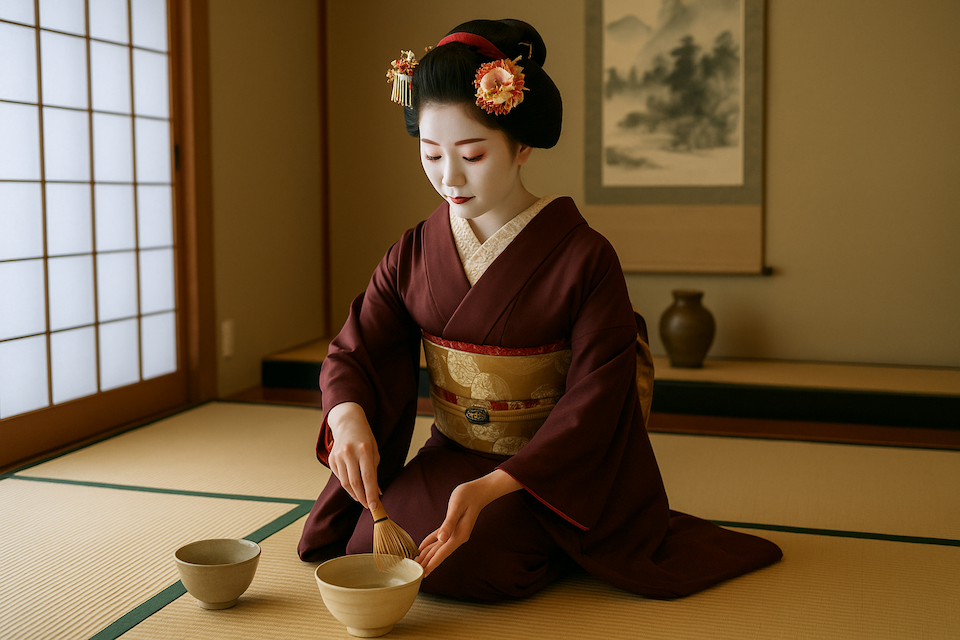
Traditional teahouses have historically operated through trusted customer relationships. This practice is often described as ichigensan okotowari, meaning that first-time customers may not be accepted without an introduction.
The tradition still exists in some geisha districts. Traditional teahouses in Kyoto have generally been entered through introductions from trusted clients, while similar customs remain in some Kanazawa teahouses.
However, international visitors do not always need a personal introduction to experience geisha culture.
- Public seasonal performances
- Official visitor programs
- Experiences through participating hotels or restaurants
- Programs arranged by travel companies or cultural-experience providers
- Private events arranged in advance
Kanazawa, for example, operates visitor programs that provide access to traditional teahouses that would otherwise be difficult for first-time visitors to enter.
For private groups, advance arrangements can also coordinate performers, venue, food, interpretation, and timing as part of a single experience.
How Much Does a Geisha Experience in Japan Cost?
There is no single standard price for a geisha experience. Cost depends on the type of experience, location, number of performers, duration, venue, food and drinks, and whether the program is shared or private.
For reference, the 2026 Miyako Odori in Kyoto offers tickets from ¥4,000 to ¥7,000 depending on the seat and whether tea is included.
Kanazawa also offers official visitor programs at relatively accessible prices. Its approximately one-hour Geiko Experience has been offered at ¥5,000 for adults, providing an example of how a structured group program can cost substantially less than a private banquet.
Private experiences are generally more expensive because the price may include performers, exclusive use of a venue, meals, drinks, interpretation, and other arrangements.
Rather than comparing headline prices alone, check what is included, how long the experience lasts, and how much interaction with the performers it provides.
Where Is the Best Place to Experience Geisha Culture in Japan?
Kyoto, Tokyo, and Kanazawa all maintain geisha traditions, but each offers a different cultural context.
Kyoto
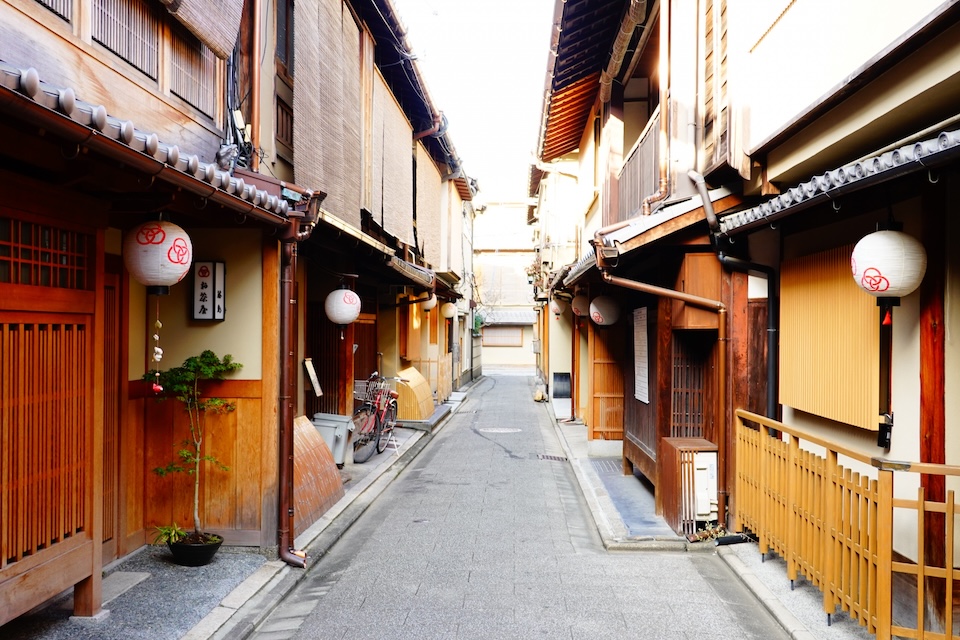
Kyoto is the city most strongly associated with geiko and maiko culture. Its five active kagai—Gion Kobu, Miyagawacho, Pontocho, Kamishichiken, and Gion Higashi—continue to support professional geiko and maiko.
Kyoto is particularly suitable for visitors interested in historic entertainment districts, seasonal dance performances, and the city’s distinctive maiko-to-geiko tradition.
Tokyo
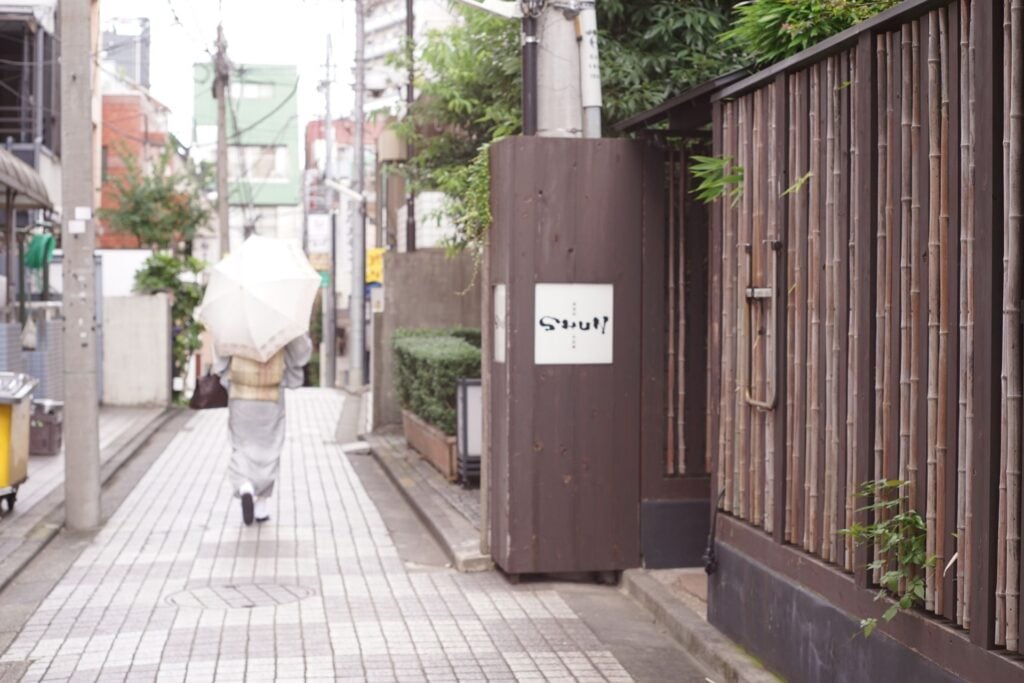
Tokyo has its own geisha traditions with roots in Edo culture. Historic geisha districts include areas such as Asakusa, Kagurazaka, Shinbashi, and Mukojima.
The atmosphere and traditions differ from Kyoto, making Tokyo a practical option for visitors who want to explore geisha culture while staying in the capital.
Kanazawa
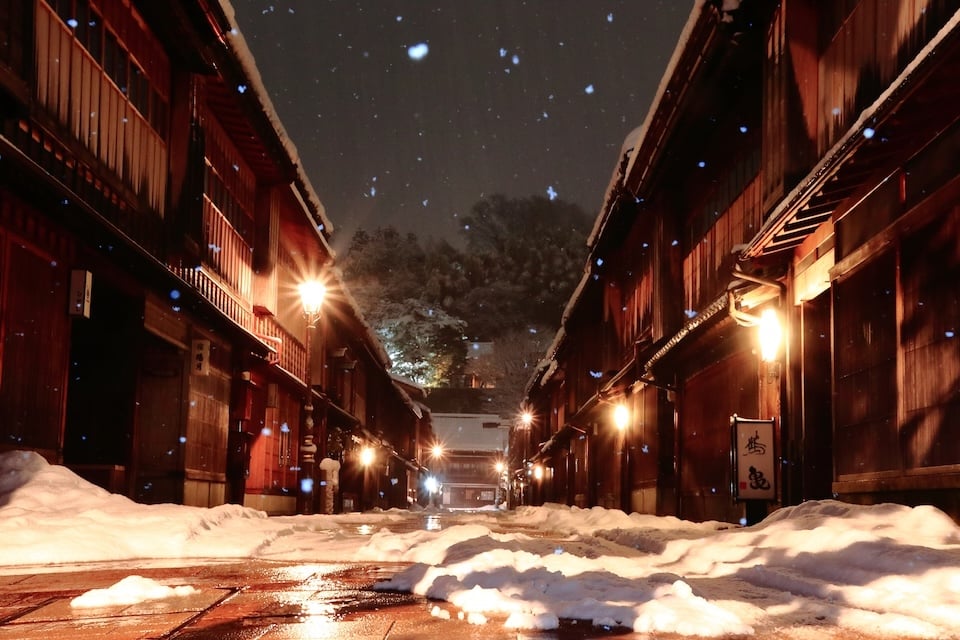
Kanazawa maintains three historic teahouse districts: Higashi, Nishi, and Kazuemachi.
The city is particularly notable for official visitor programs that provide structured access to traditional teahouses, making it possible to experience geigi performances even without the personal introduction traditionally required at many establishments.
What Happens at a Geisha Dinner or Ozashiki?
An ozashiki is a traditional social gathering in which performance and hospitality take place in the same room rather than on a distant stage.
The exact format varies, but guests may be welcomed into a tatami room for food and drinks before watching traditional dance, shamisen, or singing. Conversation with the performers is also an important part of the experience.
Guests may then participate in ozashiki-asobi, traditional party games accompanied by music and conversation. Depending on the program, there may also be opportunities for questions and photographs.
A short cultural program may last around an hour, while a private dinner can last two hours or longer. For international guests, English-language guidance or interpretation can make it easier to understand the performances, games, and cultural background.

Geisha Etiquette: What Tourists Should Know
The most important principle is to remember that geisha and maiko are working professionals, not street attractions.
Visitors should not stop, touch, follow, or take unauthorized photos or videos of geiko and maiko. Photography is also prohibited in some private areas of Gion.
During a booked experience, arrive on time and follow the instructions of the venue or organizer. Traditional teahouses may also have rules designed to protect tatami and other delicate interiors; for example, guests may be asked to wear socks rather than enter barefoot.
Photography policies vary by venue and performer, so always ask before taking photos or videos. Visitors do not need to memorize every traditional rule before attending: respectful behavior and following the host’s guidance are the best starting points.
FAQ About Geisha in Japan
Are There Male Geisha Today?
Male entertainers played an important role in the early history of geisha culture. Today they are rare, but traditions associated with male entertainers known as hōkan have not completely disappeared.
Can Geisha Get Married?
There is no universal rule covering every geisha community in Japan. Customs and professional arrangements differ, so the common claim that a geisha can never marry should not be treated as a rule applying to all geisha.
Do Geisha Speak English?
English ability varies by individual. Some programs aimed at international visitors provide English-language guidance or interpretation.
For a private experience, checking language support before booking is recommended, particularly if conversation and explanations are an important part of the experience.
Can You Take Photos With a Geisha?
Photography may be permitted during an organized experience when the performer and organizer allow it.
Street photography is different: visitors should never assume that seeing a geisha or maiko in public means they have permission to photograph them.
Experience Authentic Geisha Culture with MOTENAS JAPAN

MOTENAS JAPAN creates private geisha and maiko experiences tailored to international guests, including private travelers, families, corporate groups, and incentive programs.
Experiences can be customized according to your group size, location, and purpose, with options such as traditional dance, ozashiki games, tea, and interaction with professional performers. English-language support can also be arranged depending on the program.
Contact MOTENAS JAPAN to create a private geisha or maiko experience tailored to your visit.
旅をこよなく愛するWebライター。アジアを中心に16の国にお邪魔しました(今後も更新予定)。
ワーホリを機にニュージーランドに数年滞在。帰国後は日本の魅力にとりつかれ、各地のホテルで勤務。
日本滞在が、より豊かで思い出深いものになるように、旅好きならではの視点で心を込めてお届けします!


