





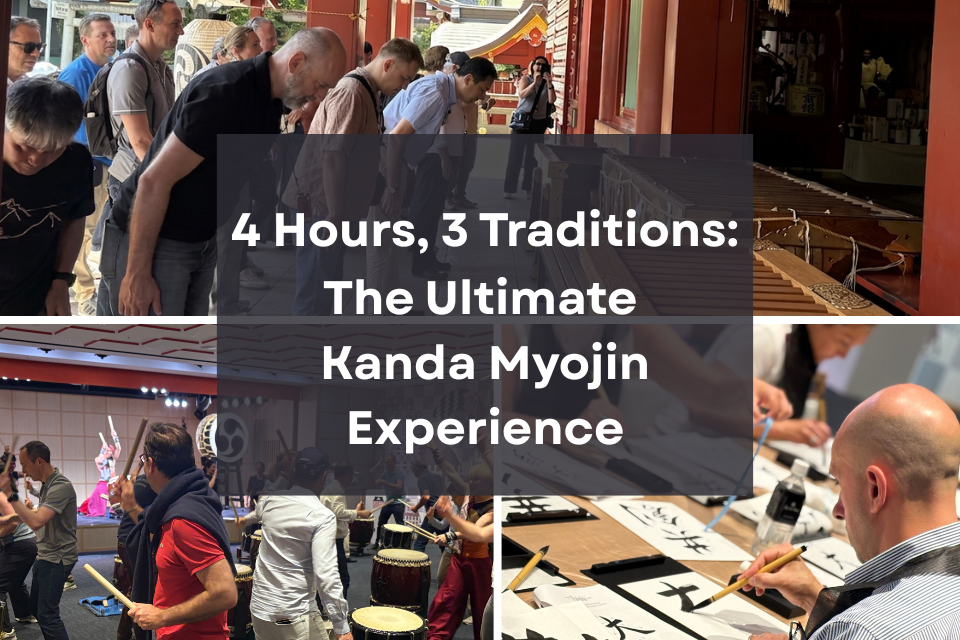
Many companies visiting Japan want more than sightseeing—they want experiences that bring people together.
In this case study, discover how one international corporate group combined traditional Japanese culture with team building through karate, calligraphy, taiko drumming, and shrine etiquette.
The Client’s Objective
This incentive travel program was designed to combine traditional Japanese culture with meaningful team-building opportunities. The goal was to create an experience that would encourage interaction, engagement, and lasting memories among participants.
Creating a Team-Building Focused Incentive Experience
The client wanted to create an incentive travel experience that combined authentic Japanese cultural activities with meaningful team-building opportunities. Rather than focusing solely on sightseeing, the goal was to encourage interaction, participation, and shared experiences among colleagues.
Participants were invited to actively engage with Japanese culture through hands-on activities while strengthening relationships through shared challenges and memorable experiences.
To achieve this, MOTENAS JAPAN designed a customized program featuring a shrine visit, calligraphy workshop, karate experience, and taiko drumming session in an authentic Japanese setting.
Program Overview
This customized program introduced participants to several aspects of Japanese culture within a single event, combining cultural discovery with opportunities for team interaction.
A Multi-Cultural Experience in a Single Event
The program included four cultural experiences:
- Shrine Visit
- Calligraphy Workshop
- Karate Experience
- Taiko Drumming Experience
Hosted at Kanda Myojin Shrine, the program combined cultural learning, creativity, and teamwork throughout a single event.
The combination of physical, creative, and cultural activities allowed participants to experience different aspects of Japanese culture while creating shared memories with colleagues.
#Experience 1: Learning Japanese Shrine Etiquette
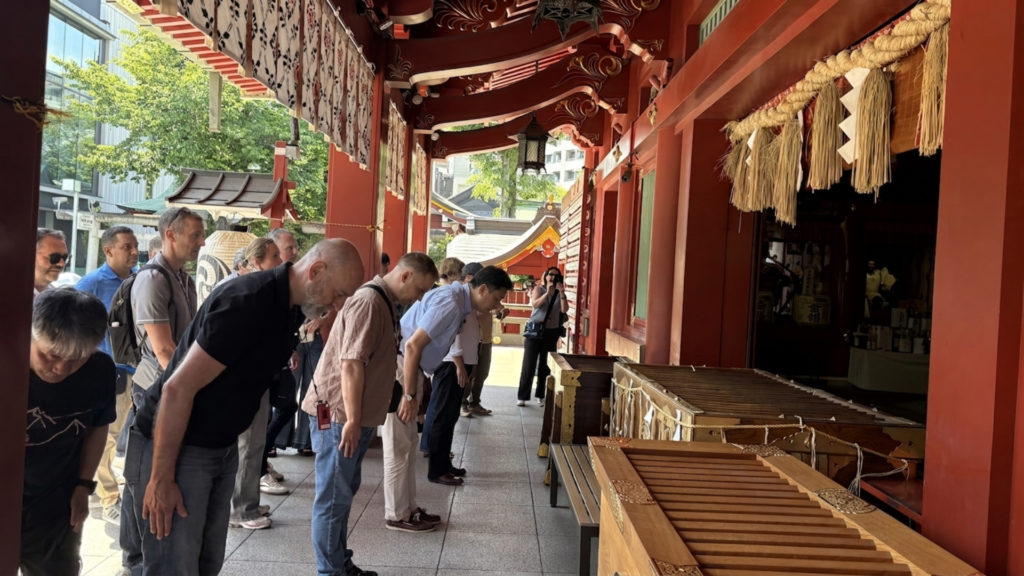
Before participating in the cultural workshops, the group began the program with a visit to Kanda Myojin Shrine. For many participants, it was their first opportunity to experience a traditional Japanese shrine and learn about customs that remain part of daily life in Japan.
Experiencing a Traditional Visit to a Japanese Shrine
Guided by a local expert, participants learned the traditional practice of “two bows, two claps, and one bow” before offering a prayer. Although unfamiliar at first, everyone quickly embraced the experience and followed the ritual with great interest.
The visit provided an introduction to Japanese culture and etiquette. Many participants were particularly interested in how shrine traditions continue to influence everyday life and special occasions in modern Japan.
As the opening activity of the program, the shrine visit helped participants gain a deeper appreciation of Japanese culture before moving on to the more interactive experiences that followed.
#Experience 2: Karate Workshop
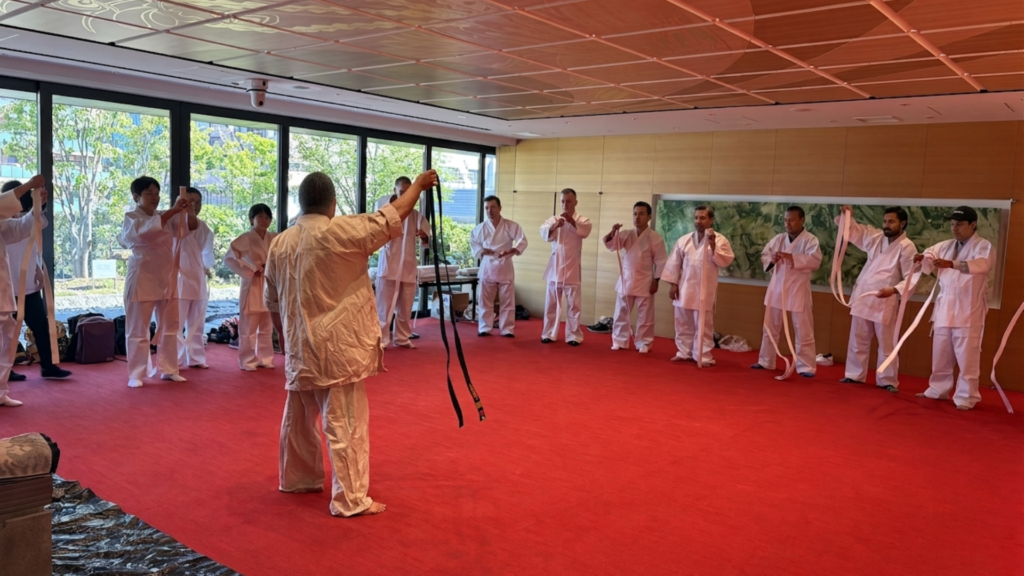
Following the shrine visit, participants experienced one of Japan’s most recognized martial arts traditions: karate. More than simply a sport, karate reflects values such as discipline, respect, focus, and continuous self-improvement.
Discovering the Spirit of Japanese Martial Arts
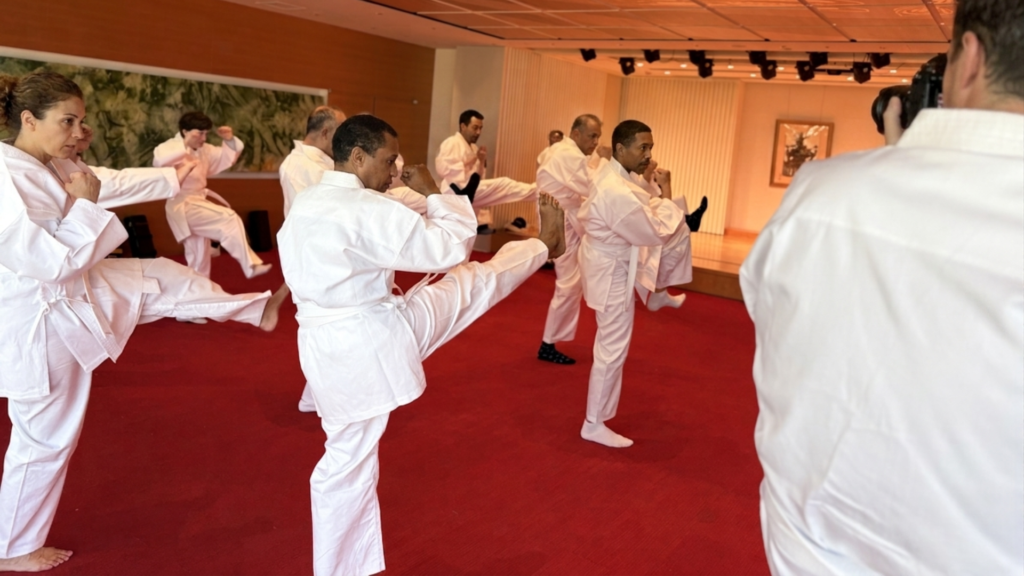
The session began with an introduction to the history and philosophy of karate. Participants learned about the differences between kata (forms) and kumite (sparring), as well as karate’s appearance as an official sport at the Tokyo 2020 Olympic Games.
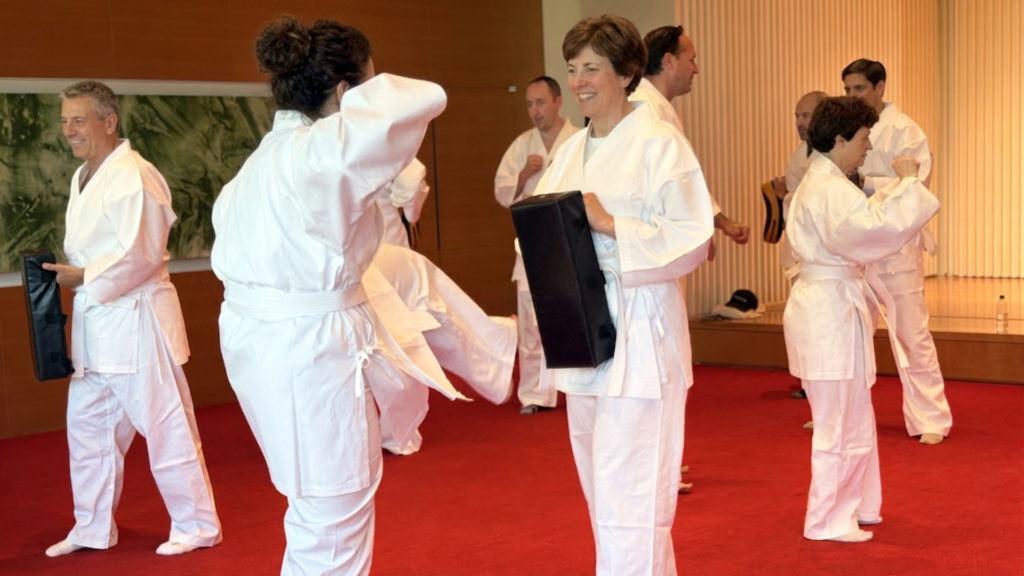
After changing into karate uniforms, the group practiced basic movements, punches, and kicks under the guidance of experienced instructors. Participants quickly became engaged, enthusiastically practicing techniques while learning the etiquette and discipline that are central to Japanese martial arts.
Team Building Through Shared Challenges
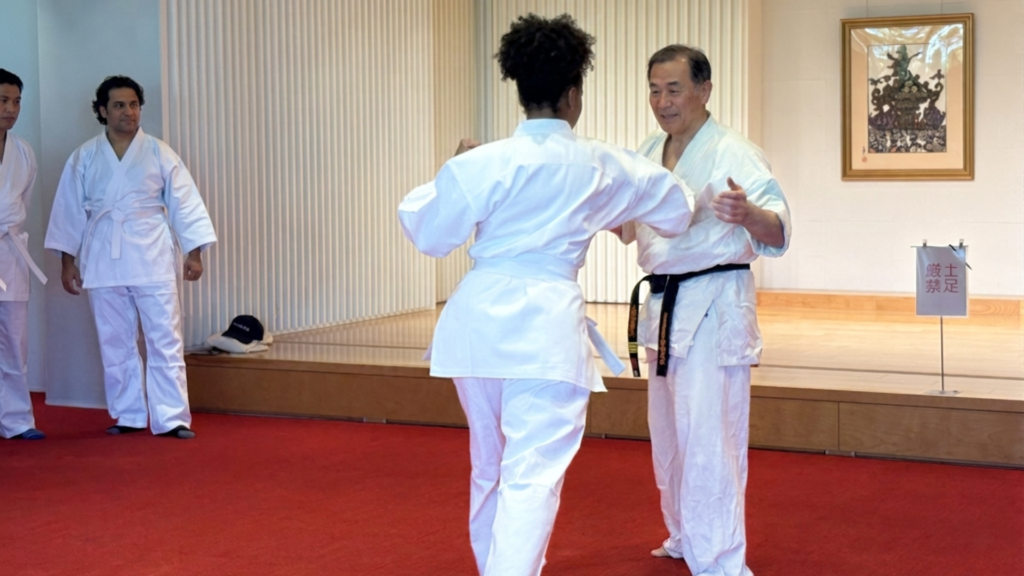
One of the highlights of the workshop was the opportunity for participants to learn together. Team members helped each other put on their uniforms, shared advice, and encouraged one another throughout the session.
Partner exercises and mitt training encouraged communication, cooperation, and mutual support, creating a natural team-building environment. Because most participants were complete beginners, everyone faced the same challenge together, helping to create a collaborative and inclusive atmosphere.
The workshop concluded with a demonstration by the instructor, showcasing the skill and dedication developed through years of training. The experience provided not only a memorable introduction to Japanese culture but also a valuable opportunity for teamwork and shared achievement.
Experience 3: Calligraphy Workshop

After the energy and movement of the karate session, participants shifted their focus to a more reflective cultural activity: Japanese calligraphy, known as shodo.
Exploring Japanese Creativity Through Shodo

The workshop began with an introduction to the basic techniques of Japanese calligraphy, including how to hold the brush, apply ink, and write on traditional Japanese paper.
For many participants, this was their first experience writing Japanese characters. After practicing basic strokes and experimenting with different kanji, participants gradually became more confident and immersed in the creative process.
The activity provided a unique opportunity to experience an important aspect of Japanese culture while encouraging concentration, creativity, and self-expression. Participants were free to choose characters that resonated with them, making each piece highly personal.
Creating a Personalized Cultural Souvenir
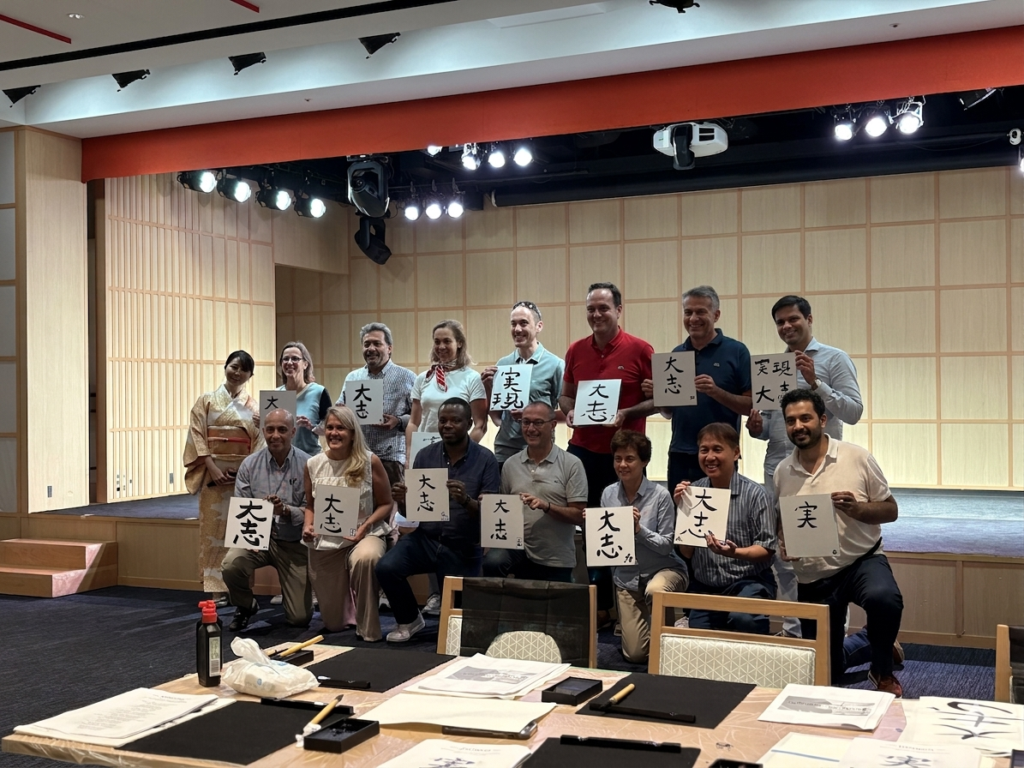
To conclude the workshop, participants created a final calligraphy piece on decorative Japanese paper and added their signatures to complete the artwork.
Each finished piece became a personalized cultural souvenir that participants could take home as a lasting reminder of their experience in Japan. Because every design reflected the individual’s own creativity and choices, no two works were exactly alike.
The calligraphy workshop offered a meaningful contrast to the more physical activities in the program, allowing participants to experience a quieter and more artistic side of Japanese culture while creating something uniquely their own.
-300x200.png)
#Experience 4: Taiko Drumming Experience

The final activity of the program brought both participant groups together for an energetic taiko drumming experience. Led by professional performers, the session introduced participants to one of Japan’s most powerful traditional performing arts.
Learning Rhythm and Coordination Through Taiko

The experience began with a live performance by professional taiko drummers. For many participants, it was their first opportunity to experience the power and energy of taiko up close.
Following the performance, participants learned basic techniques, including posture, stick handling, timing, and rhythm. After practicing simple patterns, they gradually progressed to group performances, working together to coordinate their movements and follow the beat.
The workshop encouraged active participation rather than passive observation, allowing everyone to experience the excitement of taiko regardless of their musical background.
Bringing the Entire Group Together

More than any other activity during the program, taiko encouraged participants to work as a unified team. Success depended on listening carefully, maintaining rhythm, and responding to others in real time.
As participants practiced together, communication became increasingly important. Team members encouraged one another, shared laughs, and celebrated successful performances together.
The combination of rhythm, movement, and collaboration helped create a strong sense of unity across the entire group. By the end of the session, participants had not only experienced a unique aspect of Japanese culture but also strengthened team connections through a shared challenge.
The workshop concluded with group photos and enthusiastic conversations, making it one of the most memorable highlights of the program.
Results and Participant Reactions
Throughout the program, participants had the opportunity to experience several aspects of Japanese culture while interacting with colleagues in a relaxed and engaging environment. The combination of cultural discovery and shared activities helped create a memorable experience that extended beyond traditional sightseeing.
What Participants Enjoyed Most
Several elements of the program received particularly positive reactions from participants.
The opportunity to experience multiple Japanese cultural activities within a single event was one of the program’s greatest strengths. Rather than focusing on a single workshop, participants were able to explore different aspects of Japanese culture through shrine etiquette, karate, calligraphy, and taiko drumming.
Participants also appreciated the hands-on nature of the activities. Instead of simply watching demonstrations, they actively took part in each experience and learned directly from experienced instructors.
The program also created natural opportunities for participants to connect with colleagues through shared challenges, conversations, and cultural discoveries.
Why the Program Worked
One reason for the program’s success was the balance between dynamic and reflective activities. Physical experiences such as karate and taiko were complemented by the more creative and contemplative calligraphy workshop.
The program also successfully combined individual and group participation. While participants had opportunities for personal expression, they also worked together through partner exercises, team activities, and collaborative performances.
Because every activity was designed for beginners, participants could comfortably join regardless of their previous experience with Japanese culture. This helped create an inclusive environment where everyone could participate, learn, and enjoy the experience together.
How MOTENAS JAPAN Supports Cultural Incentive Programs

This program demonstrates how traditional Japanese culture can be combined with team building to create a memorable incentive travel experience.
To bring the client’s vision to life, MOTENAS JAPAN designed a fully customized program tailored to the group’s objectives and participant profile. From venue selection and cultural instructor arrangements to bilingual support and on-site coordination, our team managed every aspect of the experience to ensure a seamless program for both organizers and participants.
Whether your goal is employee recognition, client hospitality, or team engagement, MOTENAS JAPAN can create a customized cultural incentive program designed around your organization’s needs.
Contact us to discuss your next incentive travel experience in Japan.

毎月1回以上国内・海外旅行をする旅好きライターです。
フランス・ベトナム一人旅を筆頭に、ひとりで美味しいものを食べながらゆったり旅をするのが好きです。


