





 津田修吾
津田修吾VVIP refers to individuals for whom standard VIP treatment is not sufficient.
Heads of state, members of royal families, and UHNWIs require a level of discretion, security, and coordination that goes beyond celebrity or executive handling.
Unlike VIP status, which centers on priority and comfort, VVIP classification reflects a higher level of responsibility and sensitivity.
It involves restricted access, controlled movement, and absolute confidentiality.
In this article, you will learn the true meaning of VVIP, how it differs from VIP through a clear comparison, and where the term is actually used across global contexts such as aviation, government, and high end hospitality.
Based on MOTENAS JAPAN’s experience as a luxury DMC supporting executives and high-net-worth guests visiting Japan, this guide explains VVIP clearly and accurately.
- What VVIP stands for and how the term originated
- How VVIP differs from VIP in access, security, and privacy — with a side-by-side comparison
- Who qualifies as a VVIP, from heads of state to ultra-high-net-worth individuals
- What VVIP service includes, from high-security protocol to tailor-made experiences
- How VVIP is actually used in aviation, events, government, and luxury hospitality
- What makes VVIP hospitality in Japan unique and how MOTENAS JAPAN can support your guests
Understanding the Meaning of VVIP

VVIP stands for Very Very Important Person and refers to individuals whose presence requires exceptional responsibility and discretion.
Subsequent sections focus on comparison, services, and usage contexts without repeating the definition.

What Does VVIP Stand For?
VVIP stands for Very Very Important Person.
The term is used to describe an individual whose status or circumstances require a higher level of priority, discretion, and coordination than standard VIP handling.
In professional settings, VVIP is often used as a functional classification for individuals who require enhanced security, bodyguard protection, privacy, and operational planning. At the same time, the term is also widely used as a commercial tier name for premium event tickets, memberships, casinos, and other luxury services.
Origin of the Term VVIP
The term VVIP emerged in the 1970s as an extension of VIP (Very Important Person) to describe individuals requiring an even higher level of attention.
Major dictionaries classify it primarily as South Asian English, where it is widely used in government, business, and public events, particularly in countries such as India.
Standard Definition
In simple terms, a VVIP is defined by the level of responsibility their presence creates, not by luxury or prestige.
A VVIP is generally defined as a person of exceptionally high status or influence whose presence demands the highest level of discretion, security, and operational care.
This definition highlights that VVIP status is about control, coordination, and accountability, rather than comfort alone.
To clarify this concept, VVIPs are commonly associated with the following core characteristics:
- Extremely high confidentiality requirements
- Significant political, social, or economic influence
- A level of exposure that can affect safety, diplomacy, or public order
This distinction helps clarify that VVIP classification reflects institutional responsibility, not personal privilege.
Who Qualifies as a VVIP?
Globally, individuals classified as VVIPs tend to fall into a limited number of clearly defined categories.
Typical examples include:
- Heads of state and senior government leaders
- Members of royal or imperial families
- UHNWIs (Ultra High Net Worth Individuals)
- Figures with substantial international influence
These individuals are treated as VVIPs because their actions, movements, or public exposure carry disproportionate consequences.The classification is therefore based on risk level and societal impact, rather than fame or popularity.
To illustrate the distinction more clearly, the table below compares common VIP and VVIP profiles. This comparison shows that the difference lies in sensitivity and impact, not public recognition.
| Category | Typical Profiles |
|---|---|
| VIP | Celebrities, senior executives, public figures |
| VVIP | Heads of state, royalty, UHNWIs |
In practice, VVIP status is determined by potential impact and required caution, not by visibility or media presence.
If you would like to learn more about hospitality for high-net-worth individuals, be sure to read the article below.

VIP vs VVIP — Key Differences

The key difference between VIP and VVIP lies in the level of responsibility and sensitivity involved.The comparison below highlights how treatment, responsibility, and handling levels diverge in real-world contexts.
What Does VIP Stand For?
VIP stands for Very Important Person.The term is widely used to describe individuals who receive preferential treatment due to their social position, professional role, or public recognition.
In most cases, VIP status implies enhanced comfort, priority access, and personalized attention.However, it does not automatically require the strict security, confidentiality, or risk management associated with higher classifications.
How Is VVIP Different from VIP?
The distinction between VIP and VVIP is best understood through differences in responsibility and exposure management.
VVIPs are differentiated from VIPs by several core operational factors.
- Access control: VIPs typically receive priority access, while VVIPs often require restricted or fully private access.
- Privacy level: VIP treatment values discretion, whereas VVIP handling demands absolute confidentiality.
- Security expectations: Security for VIPs is supportive; for VVIPs, it is integrated and preventive.
- Operational impact: The presence of a VVIP can influence diplomatic, legal, or institutional outcomes.
Taken together, these points show that VVIP status represents a fundamentally different level of responsibility, not simply higher status.
Comparison (VIP vs VVIP)
The table below summarizes the differences in a single view, highlighting how treatment and responsibility escalate from VIP to VVIP.
| VIP | VVIP | |
| Priority level | High | Highest |
|---|---|---|
| Access | Preferred areas | Restricted or private-only areas |
| Privacy | Important | Absolute and controlled |
| Security | Standard protective measures | High-security protocol |
| Typical profiles | Celebrities, executives | Heads of state, royalty, UHNWIs |
Overall, this comparison shows that VVIP classification is driven by sensitivity and impact, not comfort or luxury alone.
What About “VVVIP”?
The term “VVVIP” is sometimes used informally to mean Very Very Very Important Person.It has no official or standardized definition and is not recognized as a formal classification.
In practice, VVVIP may appear in internal communication to emphasize exceptional sensitivity, but it should be understood as an informal expression rather than a structured category.
What Does VVIP Service Include?
At its core, VVIP service is designed to minimize risk, provide enhanced protection, safeguard privacy, and ensure smooth coordination under highly sensitive conditions.
Rather than simply offering preferential treatment, it focuses on carefully managed services such as dedicated concierge support, private suites, and seamless arrangements for the guest and their entourage.
This section explains what VVIP service includes, without focusing on specific industries or use cases.
High-Security Protocol
At the foundation of VVIP service is a security framework designed to prevent risk before it appears.This protocol prioritizes discretion and anticipation rather than visible protection.
VVIP-level security is typically characterized by the following elements:
- Strict confidentiality measures, including NDAs and limited information access
- Multi-layered security planning, adjusted to the individual’s risk profile
- Controlled access management, ensuring separation from unauthorized parties
What matters most is not the presence of security, but the absence of incidents. Effective VVIP security is successful precisely because it remains unnoticed.
Tailor-Made Experience & Privacy
Another defining aspect of VVIP service is complete personalization combined with absolute respect for privacy and security.
Unlike standardized premium services, every arrangement is tailored to the individual’s needs, from dedicated concierge support and private suites to coordinating travel for the guest and their entourage.
This personalized approach is reflected in the following key practices:
- Dedicated coordination by a small, trusted team
- Non-public arrangements, avoiding unnecessary exposure
- Silent service principles, where assistance is available without intrusion
VVIP service values restraint over visibility. Knowing when not to act is often more valuable than providing additional attention.
If you would like to learn more about travel planning for ultra-wealthy guests, we invite you to explore the article below.
It explains the planning process and service approach in detail, supported by real-world examples.

Exclusive Facilities & Handling
To support security, privacy, and protection, VVIP services combine exclusive facilities with carefully managed operations.
Depending on the setting, these may include private suites, concierge support, non-public check-in, first-class or private jet transfers, and dedicated routes for the guest and their entourage.
These measures are designed to ensure discretion and efficient handling rather than simply offering preferential treatment.
| Aspect | Standard Premium Service | VVIP Service |
|---|---|---|
| Waiting areas | Shared or semi-private | Fully private or restricted |
| Check-in process | Priority-based | Non-public and discreet |
| Movement flow | Optimized for speed | Optimized for separation and control |
| Staff involvement | Visible assistance | Minimal, discreet presence |
The key takeaway from this comparison is that VVIP facilities prioritize control and stability over convenience.
FAQ — Common Questions About VVIP
This FAQ section is designed to quickly answer common questions about VVIP.
- Where is the term VVIP most commonly used?
-
The term is most commonly used in settings where coordination, discretion, and accountability are critical. It appears frequently in government and diplomatic operations, aviation and private travel management, large international events, and high-end hospitality. Across these contexts, the classification helps align responsibilities when a guest’s presence carries heightened sensitivity.
- How is VVIP security handled?
-
VVIP security is handled as a preventive and integrated system. Instead of relying on visible measures alone, planning emphasizes advance coordination, controlled access, and minimizing exposure. The goal is to reduce uncertainty and risk before issues arise, not to draw attention to protection itself.
- Is VVVIP a real or official term?
-
No, “VVVIP” is not an official or standardized classification. The term may be used informally to emphasize extreme importance, but it lacks a formal definition and consistent professional usage. When you see it, treat it as a conversational or internal expression rather than a structured category.
- Can private individuals become VVIPs?
-
Yes, private individuals can receive VVIP treatment under certain circumstances. This usually happens when an individual’s influence, wealth, or situation creates security or privacy requirements comparable to those of public figures. In such cases, classification is determined by context and risk, not by official title.
- Is VVIP higher than VIP?
-
Yes. A VVIP is generally treated as a level above a VIP, with stricter access control, enhanced security, and greater privacy requirements. In luxury hospitality, aviation, and government settings, VVIPs often receive more personalized services and exclusive arrangements than standard VIPs.
- What is higher than VVIP?
-
There is no official rank higher than VVIP. Although terms such as VVVIP are sometimes used, they are informal and do not represent a universally recognized classification. For more information, see the VVVIP section above.
- Who is considered a VVIP guest?
-
A VVIP guest is typically a head of state, member of a royal family, ultra-high-net-worth individual (UHNWI), or another person requiring exceptional security, privacy, and personalized service. In hotels and airlines, VVIP treatment may include private check-in, dedicated staff, and exclusive facilities.
- What does VVIP mean in tickets or events?
-
In tickets and events, VVIP usually refers to the highest commercial package above standard VIP admission. VVIP tickets often include premium seating, exclusive access, private lounges, meet-and-greet opportunities, or other luxury benefits, depending on the organizer.
Where Is VVIP Actually Used? Real Examples
Although VVIP is widely recognized, its meaning varies depending on the context. Below are real-world examples of how the term is used in aviation, events, government, and luxury hospitality.
VVIP Aviation: Private Jets and Exclusive Airport Services
In aviation, VVIP refers to highly customized private jet travel for heads of state, royalty, executives, and other high-profile guests.
VVIP aircraft typically accommodate 16 to 50 passengers and feature luxury interiors, meeting spaces, and enhanced security.
Many VVIP travelers also use private terminals (FBOs) for discreet check-in, immigration, and boarding away from the main airport.
Events & Tickets: VVIP as the Highest Access Tier
At concerts, sporting events, and business conferences, VVIP is often used as the highest ticket tier above standard VIP packages.
VVIP tickets may include premium seating, private lounges, backstage access, meet-and-greet opportunities, and dedicated guest services.
The exact benefits vary depending on the event organizer.
Government & Diplomacy: Protocol for Heads of State
In government and diplomacy, VVIP typically refers to heads of state, royalty, and other senior officials who require the highest level of protocol, security, and coordination.
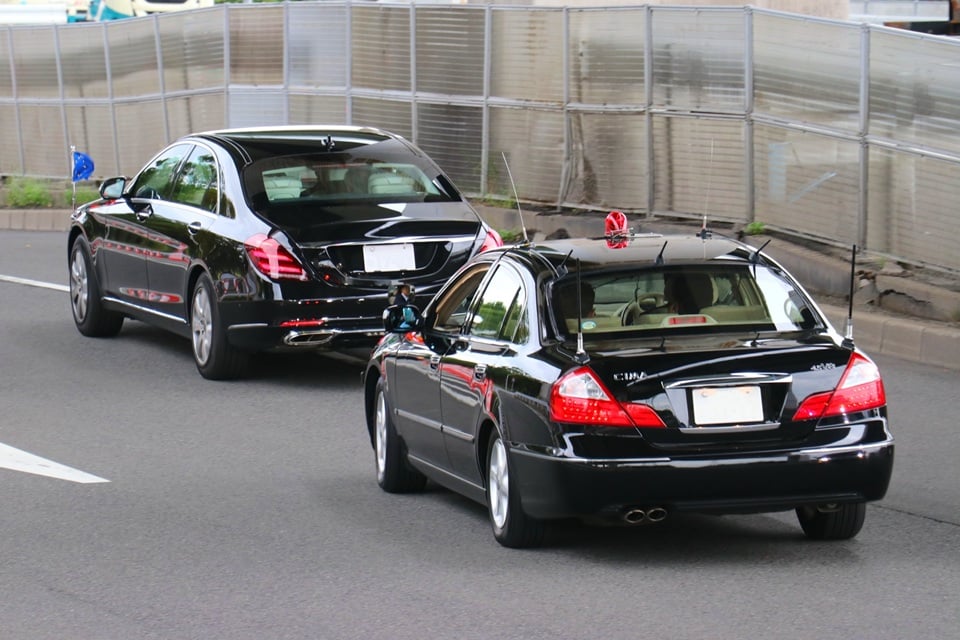
Their visits often involve official ceremonies, close protection, and carefully managed transportation and accommodations.
How are heads of state actually accommodated during official visits to Japan? If you’d like to learn more through real-world examples, be sure to read the article below.

Luxury Hospitality: Personalized VVIP Experiences
In luxury hospitality, VVIP service goes beyond premium amenities to provide fully personalized experiences.
From private check-in and dedicated butlers to exclusive cultural activities and tailored itineraries, every detail is designed to ensure comfort, privacy, and discretion.
If you would like to learn more about premium, tailor-made experiences in Japan, we invite you to explore the article below. It showcases a variety of exclusive activities and services through real-world examples.
VVIP Hospitality in Japan

VVIP hospitality in Japan is defined not by visible luxury, but by anticipation, restraint, and cultural sensitivity.
Rather than emphasizing exclusivity or special treatment, Japanese hospitality focuses on creating an environment where nothing feels intrusive, excessive, or disruptive.At its core, Japanese omotenashi values preparation over performance.
For VVIP guests, this often involves measures such as advance coordination across teams, the use of private entrances, and carefully planned movement that avoids unnecessary exposure.
Privacy is protected without explanation, and comfort is delivered without drawing attention to the service itself.This approach reflects a cultural belief that true hospitality lies in maintaining harmony and trust, not in showcasing privilege.
As a result, VVIP hospitality in Japan offers a distinctive approach that emphasizes discretion, respect, and consistently high standards of service.
For professionals working in security, aviation, diplomacy, or luxury hospitality, understanding this Japanese approach provides valuable insight into delivering culturally appropriate VVIP experiences.
If you are looking for a travel company that can provide culturally tailored VVIP services in Japan, please contact MOTENAS JAPAN using the information below.
For more detailed examples of VVIP hospitality in Japan, we also invite you to explore the related article below.

Plan an Exceptional VVIP Experience in Japan
If you are looking to provide VVIP guests with a level of security, privacy, and personalized hospitality that goes beyond standard VIP services, please feel free to contact MOTENAS JAPAN. Drawing on our extensive experience, we create tailor-made VVIP experiences that reflect each guest’s unique needs and leave a lasting impression.

We are working day and night to spread Japan’s unique hospitality culture to people around the world. Please feel free to contact us for any inquiries regarding the reception and hospitality of guests visiting Japan.


