





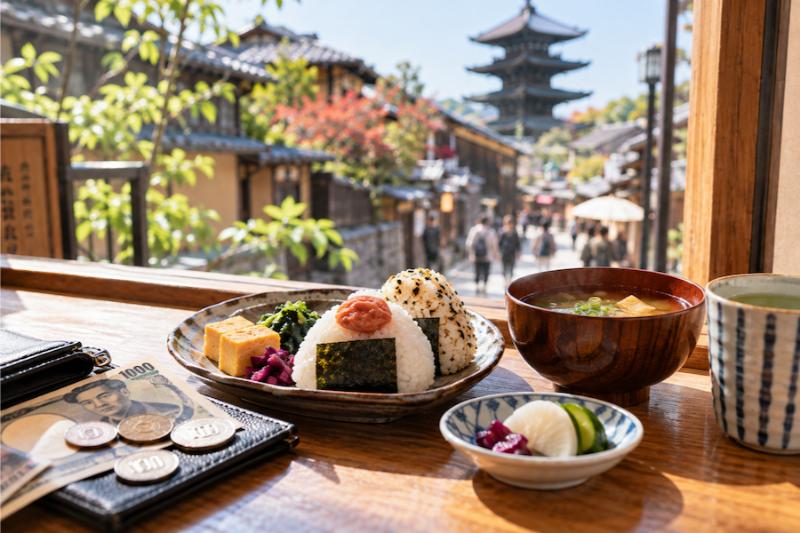

Planning your food budget is an important part of preparing for a trip to Japan, but eating well doesn’t have to be expensive.
Japan offers dining options for almost every budget, from convenience-store breakfasts and casual noodle shops to sushi restaurants and traditional multi-course meals. As a starting point, travelers can allow around ¥4,000–¥6,000 per person per day for everyday meals and drinks, while those who choose inexpensive restaurants and supermarkets may spend less.
This 2026 guide compares published restaurant prices, explains how to calculate your daily food budget, and shares ways to enjoy Japanese cuisine without overspending.
- How much popular Japanese foods cost in 2026, including gyudon, udon, set meals, and sushi
- How much to budget for food per day or for a seven-day trip
- Whether you can eat three meals a day in Japan for ¥3,000
- Where to find affordable food at convenience stores, supermarkets, and restaurants
- What affects food prices in Tokyo, Osaka, and Kyoto
- How to avoid unexpected dining costs and make the most of your food budget
How Much Does Food Cost in Japan in 2026?
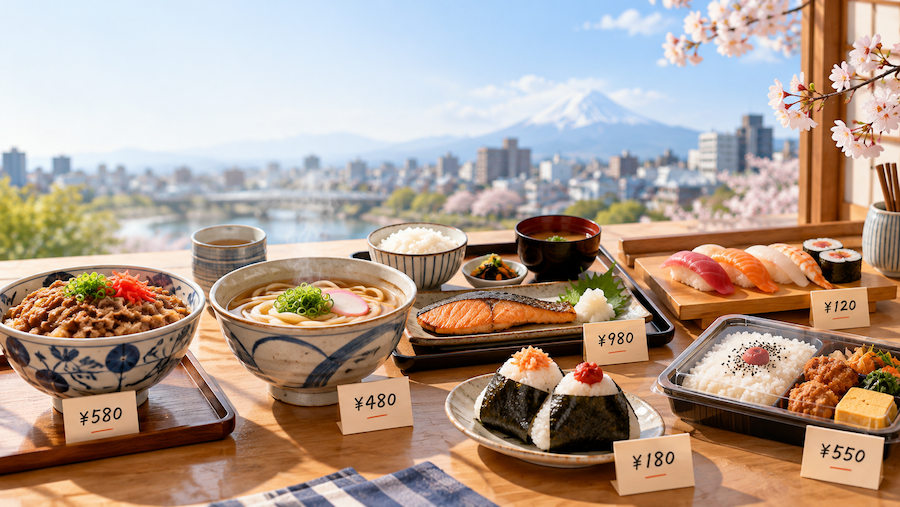
You can find meals for under ¥1,000 at Japanese restaurant chains, although the total cost of dining varies considerably by restaurant type. A simple beef bowl or noodle dish is generally more affordable than a multi-dish dinner, premium sushi, or a traditional kaiseki course.
To understand food costs in Japan, it helps to compare actual menu prices rather than relying on a single national average.
Sample Prices of Popular Japanese Foods
Published menus from major restaurant chains provide reference points for travelers planning their food expenses.
The following table shows selected official menu prices available in 2026.
| Food | Restaurant | Published Price |
|---|---|---|
| Gyudon (beef bowl), regular size | Sukiya | ¥480 |
| Kake udon, regular size | Marugame Seimen | ¥440 |
| Ootoya Lunch Set Meal | Ootoya | ¥930 |
| MOS Burger (signature burger) | MOS Burger | ¥500 |
| Teriyaki Burger | MOS Burger | ¥490 |
| Selected sushi plates (salmon, squid, and shrimp) | Sushiro | From ¥120 per plate |
These examples show that inexpensive meals remain available, even as restaurant prices change over time.
At Sukiya, for instance, a regular-sized beef bowl costs ¥480. At Marugame Seimen, a regular serving of kake udon costs ¥440, before adding any extra toppings or side dishes.
A Japanese set meal, or teishoku, generally includes a main dish, rice, soup, and side dishes. Ootoya’s Lunch Set Meal is listed at ¥930 in its Tokyo metropolitan-area menu, providing one example of a complete restaurant meal for less than ¥1,000.
For sushi, the total price depends on how many plates you order and which dishes you choose. Sushiro offers selected plates, including salmon, squid, and shrimp, from ¥120, although higher-priced plates and side dishes increase the final bill.
Ramen is another popular option, but its price varies depending on the restaurant, broth style, and toppings. Travelers should check the current menu of the shop they plan to visit rather than assuming every bowl costs the same.
Premium wagyu, omakase sushi, and traditional kaiseki belong to a different category of dining. Before booking, check the course price, included dishes, and any additional charges.
How Much Do Breakfast, Lunch, and Dinner Cost?
Daily food spending depends on where you eat and whether you choose a simple meal or a sit-down restaurant experience.
The following amounts are suggested planning allowances, not measured national averages.
| Meal | Suggested Budget | Typical Options |
|---|---|---|
| Breakfast | ¥400–¥800 | Onigiri, sandwiches, bakery items, café breakfast |
| Lunch | ¥800–¥1,500 | Gyudon, noodles, curry, Japanese set meals |
| Dinner | ¥1,200–¥3,000 | Casual restaurants, sushi, izakaya |
| Drinks and snacks | ¥300–¥700 | Coffee, tea, soft drinks, desserts |
Breakfast can be relatively inexpensive, particularly if you buy onigiri or bakery items at a convenience store.
For lunch, casual Japanese restaurants are often a good choice. Set meals combine several components into a single order, allowing you to see the total price before ordering.
Dinner offers more variety. A simple noodle dish may keep spending low, while sushi, several izakaya dishes, or a restaurant course will require a larger budget.
If breakfast is included in your accommodation, you can reduce the amount allocated to food each day.
How Much Should You Budget for Food Per Day in Japan?
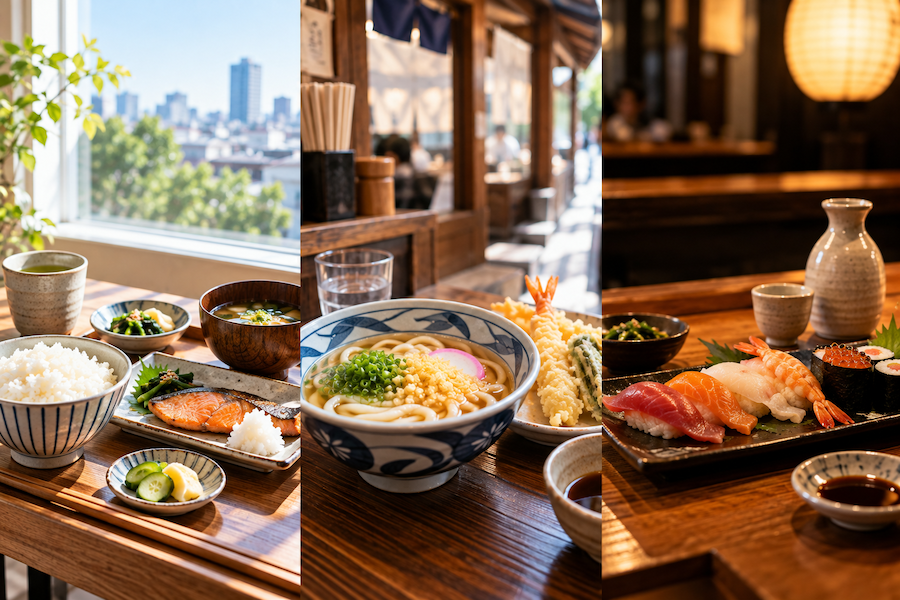
For everyday dining, ¥4,000–¥6,000 per person per day is a reasonable starting budget, but your actual spending can be lower or considerably higher. The best allowance depends on how often you eat out, whether you purchase drinks, and how important dining experiences are to your trip.
The amounts below are planning estimates rather than official statistics on average tourist spending.
Daily Food Budgets by Travel Style
| Travel Style | Daily Planning Budget | Typical Dining Choices |
|---|---|---|
| Budget | ¥2,500–¥4,000 | Convenience stores, supermarkets, beef bowl chains, noodle shops |
| Moderate | ¥4,000–¥8,000 | Café breakfasts, set lunches, casual restaurant dinners |
| Premium / Food-focused | ¥8,000+ | Specialty restaurants, premium sushi, wagyu, and traditional dining |
Budget travelers can keep spending down by combining inexpensive restaurants with ready-to-eat supermarket meals.
A moderate budget gives more flexibility for sit-down lunches, cafés, and casual evening dining without having to select the cheapest option every time.
Food-focused travelers may prefer to set aside additional money for experiences such as omakase sushi, wagyu, or kaiseki. Even ¥8,000 a day may not cover premium dining, as a single omakase or kaiseki meal can cost considerably more.
Alcohol, desserts, specialty coffee, and additional courses can also make a noticeable difference to the final total.
These food budgets exclude accommodation, transportation, sightseeing, and other travel expenses.
How Much Will Food Cost for a 7-Day Trip?
To estimate your food budget for a week in Japan, multiply your expected daily spending by seven.
| Daily Budget | Total for 7 Days |
|---|---|
| ¥3,000 | ¥21,000 |
| ¥5,000 | ¥35,000 |
| ¥8,000 | ¥56,000 |
| ¥12,000 | ¥84,000 |
For example, someone budgeting ¥5,000 per day should allow approximately ¥35,000 for seven days of food and drinks.
You do not need to spend exactly the same amount every day. One day might involve a quick restaurant lunch and a simple dinner, while another might include a more elaborate Japanese meal.
If you plan to visit a premium restaurant, check its current prices and add the amount to your budget separately.
For travelers who prefer hotel restaurant dinners or more upscale dining, food costs may be higher than the everyday budgets shown here. Our broader Japan travel cost guide includes a higher dining budget based on those preferences.
Beyond Everyday Dining: A MOTENAS JAPAN Experience
For international guests and corporate groups, Japanese cuisine can also become part of a cultural program.
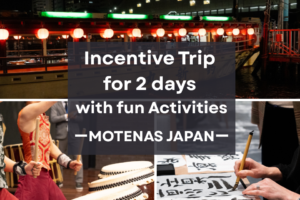
In a two-day incentive travel program arranged by MOTENAS JAPAN, participants joined a hands-on sushi-making session, preparing eight types of sushi, including rolls and traditional nigiri. Vegetarian options were also available, allowing guests with different food preferences to participate.
The itinerary included an evening dinner cruise aboard a traditional yakatabune, featuring geisha performances and interactive entertainment.
This program illustrates how Japanese dining can be combined with cultural activities and shared experiences.
Unlike an ordinary restaurant meal, customized arrangements require consideration of the program format, guest preferences, dietary requirements, venue, and schedule. The cost therefore depends on the particular arrangements rather than a standard daily food allowance.
Looking for a Special Japanese Dining Experience?
From hands-on sushi-making experiences to traditional dining programs for corporate groups and VIP guests, MOTENAS JAPAN arranges customized cultural experiences that bring Japanese hospitality to life.
Tell us about your guests, preferences, and plans, and our team can help explore suitable options.
Can You Eat in Japan for ¥3,000 a Day?
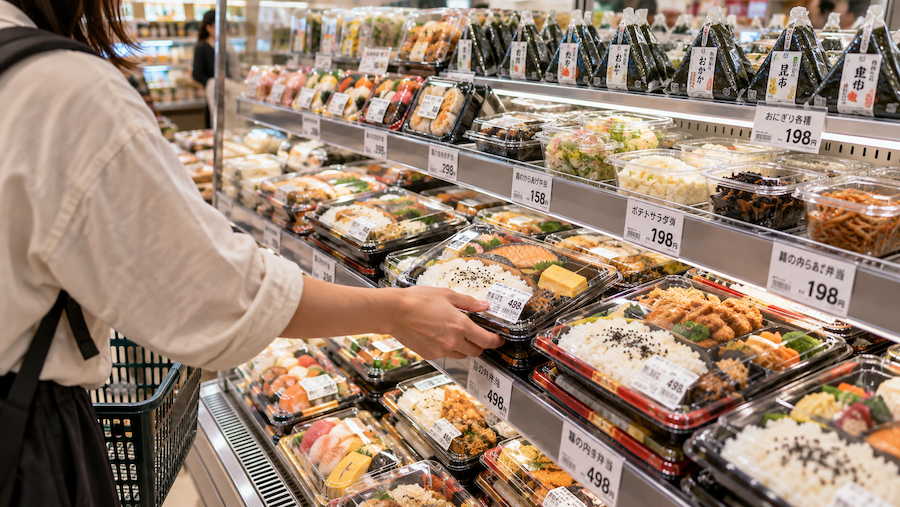
Yes, eating three meals a day in Japan for ¥3,000 is possible if you choose inexpensive meals and limit extras. This budget works best for travelers who are comfortable eating at casual restaurant chains, convenience stores, and supermarkets.
A Sample ¥3,000 Daily Meal Plan
Here is one way to allocate a daily budget using a published restaurant price and estimated allowances for other purchases.
| Meal | Example | Cost |
|---|---|---|
| Breakfast | Convenience-store breakfast | ¥500 |
| Lunch | Regular gyudon at Sukiya | ¥480 |
| Dinner | Supermarket bento | ¥800 |
| Drinks, snacks, and contingency | Remaining allowance | ¥1,220 |
| Total Daily Budget | ¥3,000 |
This three-meal plan leaves ¥1,220 for drinks, snacks, or unexpected expenses. You can also use part of that remaining amount to choose a more substantial lunch or dinner.
The advantage of this approach is flexibility. Rather than choosing the same inexpensive dish repeatedly, you can combine a restaurant meal with prepared food from a supermarket.
It is also possible to substitute a noodle shop or another casual restaurant for the beef bowl, provided the final meal price fits the budget.
What Can You Expect on a ¥3,000 Budget?
A ¥3,000 budget leaves little room for specialty restaurants or frequent café visits.
It is better suited to travelers who enjoy simple meals and are willing to compare prices before ordering.
Alcohol, multiple restaurant courses, and premium sushi are difficult to fit into this budget.
If trying several specialty restaurants is an important part of your trip, consider increasing your daily allowance or setting aside a separate amount for those meals.
Where Can You Find Affordable Food in Japan?
Convenience stores, supermarkets, and casual restaurant chains are among the easiest places to find inexpensive food in Japan. Each offers different advantages depending on your schedule, preferred meals, and budget.
Convenience Stores and Supermarkets
Japanese convenience stores, commonly called konbini, offer a wide selection of ready-to-eat food.
Major chains include 7-Eleven, Lawson, and FamilyMart. Their shelves typically include onigiri, sandwiches, noodles, bento boxes, and hot snacks.
They are particularly convenient when you need a quick breakfast or want to eat outside regular restaurant hours.
However, buying several small convenience-store items does not always work out cheaper than ordering a complete meal at a casual restaurant.
Supermarkets offer another option. Many sell freshly prepared bento, sushi, salads, and side dishes suitable for a simple lunch or dinner.
Some supermarkets discount selected prepared foods later in the day. The timing and amount depend on the store, remaining stock, and local demand, so discounts should not be treated as guaranteed.
Department-store food halls, known as depachika, can also be interesting places to explore Japanese prepared food, although prices range from affordable snacks to premium specialties.
Affordable Restaurant Chains and Local Eateries
Casual restaurant chains are a good option for travelers who want warm food at clearly displayed prices.
Sukiya, Yoshinoya, and Matsuya are known for beef bowls and other rice dishes. Noodle shops offer udon, soba, and ramen, while curry restaurants and family restaurants provide additional choices.
Some restaurants use ticket machines for ordering, making the menu and price visible before purchasing.
Local shokudo, or casual Japanese eateries, are another option. Their menus may include grilled fish, fried chicken, curry, noodles, and set meals.
When comparing dining options, check what is included in the price. A low-priced individual dish may cost more once you add toppings, sides, or drinks.
Are Food Prices Different in Tokyo, Osaka, and Kyoto?
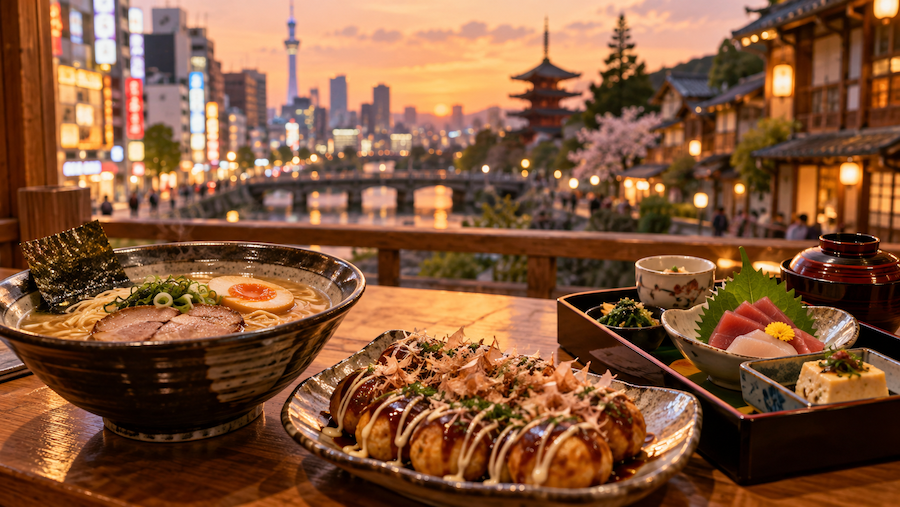
Food prices vary across Tokyo, Osaka, and Kyoto, but restaurant type and location are often more important for budgeting than the city alone. All three cities offer affordable dining alongside more expensive specialty restaurants.
Comparing Dining Costs Across Major Cities
| City | Dining Characteristics | Budget Considerations |
|---|---|---|
| Tokyo | Extensive variety, including noodle shops, casual chains, international restaurants, and luxury dining | Compare options between major tourist districts and surrounding neighborhoods |
| Osaka | Known for casual specialties such as takoyaki, okonomiyaki, and kushikatsu | Compare individual restaurant menus rather than assuming every meal is cheaper |
| Kyoto | Traditional Japanese cuisine, tofu dishes, and kaiseki restaurants | Check prices carefully when dining in historic or heavily visited districts |
Tokyo’s large selection of restaurants makes it possible to choose between inexpensive meals and premium dining experiences.
Osaka is particularly well known for casual regional food, making it appealing for travelers who want to try local specialties without committing to formal restaurant dining.
Kyoto offers traditional dining experiences that may be worth budgeting for separately, especially if you are interested in kaiseki or other specialty meals.
Nationwide restaurant chains can serve as reference points when comparing prices. However, restaurant prices and available menus may vary even within the same chain.
There is no reliable basis for assuming that one of these cities is always a fixed percentage cheaper than the others. Travelers should focus on the restaurants they intend to visit and the published prices for those locations.
What Additional Dining Costs Should Tourists Know About in Japan?
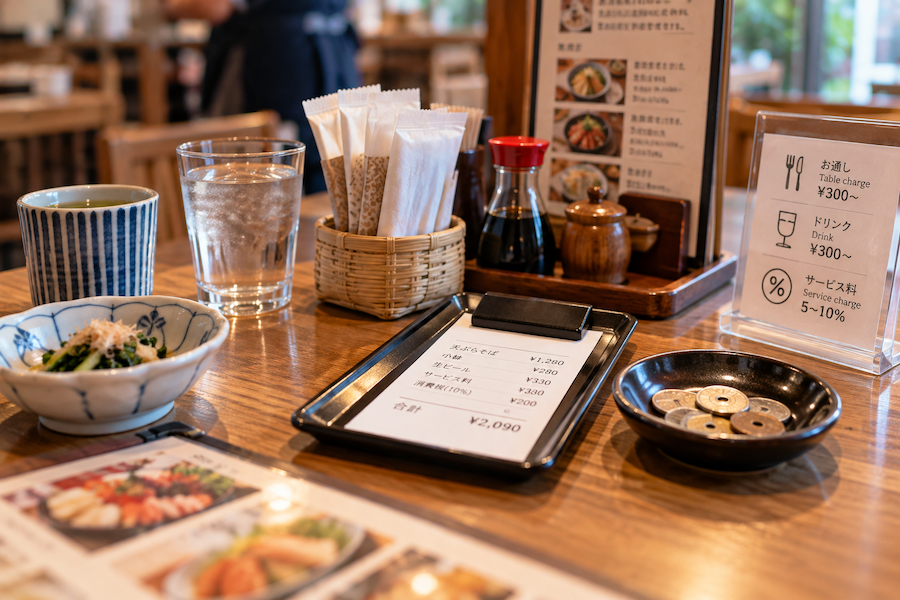
Most restaurants in Japan display tax-inclusive prices, but it helps to understand eat-in vs. takeaway pricing, service charges, seating charges, and late-night surcharges. These details can affect what you pay, particularly at izakayas and upscale restaurants.
Consumption Tax, Service Charges, and Otoshi
Japan’s standard consumption tax rate is 10%. Qualifying takeaway food and non-alcoholic beverages generally fall under the reduced 8% rate, while meals eaten in restaurants are generally subject to 10%.
Businesses are generally required to display tax-inclusive prices to consumers, so the listed price should ordinarily already reflect the applicable consumption tax.
However, restaurants may display different prices for eat-in and takeaway orders, and some takeaway items may carry packaging charges.
Some restaurants, particularly those in hotels and premium dining establishments, also apply a separate service charge.
At certain izakayas, customers may receive a small appetizer called otoshi, accompanied by a per-person charge. The fee is part of the restaurant’s dining system rather than a dish selected from the menu.
Another consideration is late-night pricing. For example, Sukiya states that an additional 7% charge applies to orders placed between 10:00 PM and 5:00 AM.
For takeaway orders, packaging fees may also apply. Marugame Seimen, for example, charges an additional ¥50 for takeaway containers on most udon orders.
These charges are not universal. Before ordering, check the establishment’s menu and pricing conditions, especially if you are dining late at night or booking a special meal.
Do You Need to Tip at Restaurants in Japan?
No, tipping is not generally expected at restaurants in Japan.
Unlike countries where customers customarily add a percentage to the bill, diners in Japan normally pay the amount requested by the restaurant.
According to the Japan National Tourism Organization, tipping is not customary at restaurants, cafés, hotels, or taxis.
However, tipping should not be confused with service charges included in a restaurant’s pricing policy.
If a restaurant lists a service charge or seating charge, it remains payable even though tipping is not expected.
For further guidance, see JNTO’s official explanation of tipping in Japan.
How Can You Save Money on Food in Japan?
The most effective way to control your food budget is to combine affordable everyday meals with selected restaurant experiences and check menu prices in advance.
Here are seven ways to manage dining costs during your trip.
Some restaurants offer lunch-only selections or set meals, so compare lunch and dinner menus before booking.
Beef bowl, noodle, and curry chains can provide warm, filling food without a large expense.
Supermarket prepared meals may offer better value, especially when selected items are discounted.
This is particularly helpful in popular tourist areas, where restaurant options and prices can vary widely.
An included breakfast can reduce your daily food spending, while an optional hotel breakfast should be compared with nearby alternatives.
Many casual restaurants provide these without an additional charge.
Rather than increasing your entire daily budget, reserve a separate amount for premium sushi, wagyu, or traditional Japanese cuisine.
The aim is not necessarily to find the cheapest food every day, but to balance cost, convenience, and the experiences you want to enjoy.
FAQ About Food Prices in Japan
Is Food Expensive in Japan for Tourists?
Not necessarily. Japan offers a broad range of dining options, and inexpensive meals are available at casual restaurants and major chains. Your spending depends on the restaurant, what you order, and whether you include premium experiences. Comparing menus in advance is more helpful than relying on a single national average.
How Much Does Sushi Cost in Japan?
Sushi prices depend on the restaurant and how much you order. At Sushiro, selected sushi plates start at ¥120, although prices vary by location and item. Premium establishments may offer fixed-price courses. Check the current menu, the number of dishes included, and any service charges to estimate the full cost.
Are Vegetarian and Vegan Meals More Expensive in Japan?
Not necessarily. Vegetarian and vegan meal prices depend on the ingredients and restaurant type. Simple tofu, rice, and vegetable dishes can be affordable, while specialty restaurants may charge more. Travelers should confirm ingredients because Japanese dishes that appear vegetarian can contain fish-based dashi or other animal-derived seasonings.
Do Restaurants in Japan Accept Credit Cards?
Many restaurants in Japan accept credit cards, especially major chains, hotels, and larger establishments. However, payment options vary, and smaller eateries may accept only cash or selected electronic payment methods. Check in advance and carry some Japanese yen for flexibility.
Planning Your Food Budget in Japan
Japan offers dining options for a wide range of budgets. For everyday meals, a daily planning allowance of ¥4,000–¥6,000 per person provides a starting point, while travelers choosing inexpensive chains, convenience stores, and supermarkets may spend less.
The best approach is to calculate your budget based on the meals you want to enjoy, check current restaurant prices, and allow for drinks and additional charges.
You can also combine affordable everyday dining with an occasional special Japanese food experience to make the most of your visit.
Plan a Memorable Japanese Dining Experience with MOTENAS JAPAN
Planning a cultural or dining experience for international guests, a corporate group, or VIP visitors?
MOTENAS JAPAN creates tailored programs that bring together Japanese food, culture, and hospitality. Contact our team to discuss your requirements, preferences, and plans.
We are working day and night to spread Japan’s unique hospitality culture to people around the world. Please feel free to contact us for any inquiries regarding the reception and hospitality of guests visiting Japan.

