




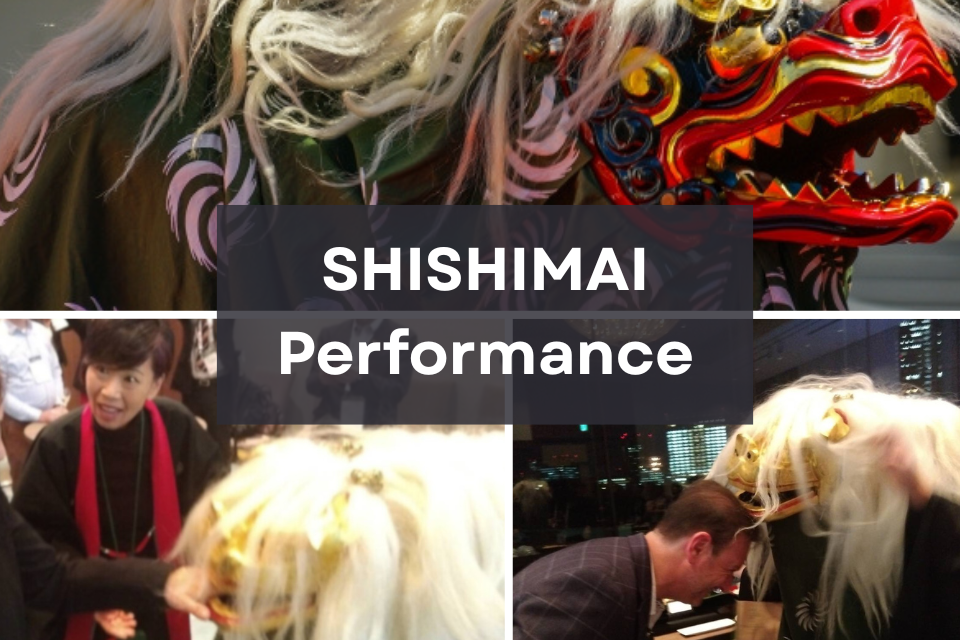
At first glance, shishi-mai (the traditional Japanese lion dance) may appear intimidating to some international guests. However, once its origins and cultural meaning are explained, many discover a tradition filled with symbolism, warmth, and joy.
As part of the International Conference Key Person Invitation Program, we presented a shishi-mai performance for distinguished guests from Germany, Switzerland, Italy, Poland, and Spain.
This article introduces the essence of traditional cultural experiences offered by MOTENAS Japan, and how Japanese hospitality can be conveyed through performance.
Customer Requests and Background
We were commissioned to arrange a traditional Japanese performance for a Japan-themed cultural party held at a hotel in Tokyo.
Originally, a dynamic karate demonstration was planned. However, due to venue regulations, it could not be conducted safely on site, requiring an immediate revision of the program.
After consultation, we proposed two alternatives: Japanese classical dance or shishi-mai. Following careful discussion, shishi-mai was selected for its reputation as a traditional performing art believed to bring good fortune and ward off misfortune.
Schedule for the day
- 18:50~19:00 |Opening
- 19:00~19:10 |Processional performance and commentary (The shishi moves throughout the venue)
- 19:10 | Closing
Experience Highlights
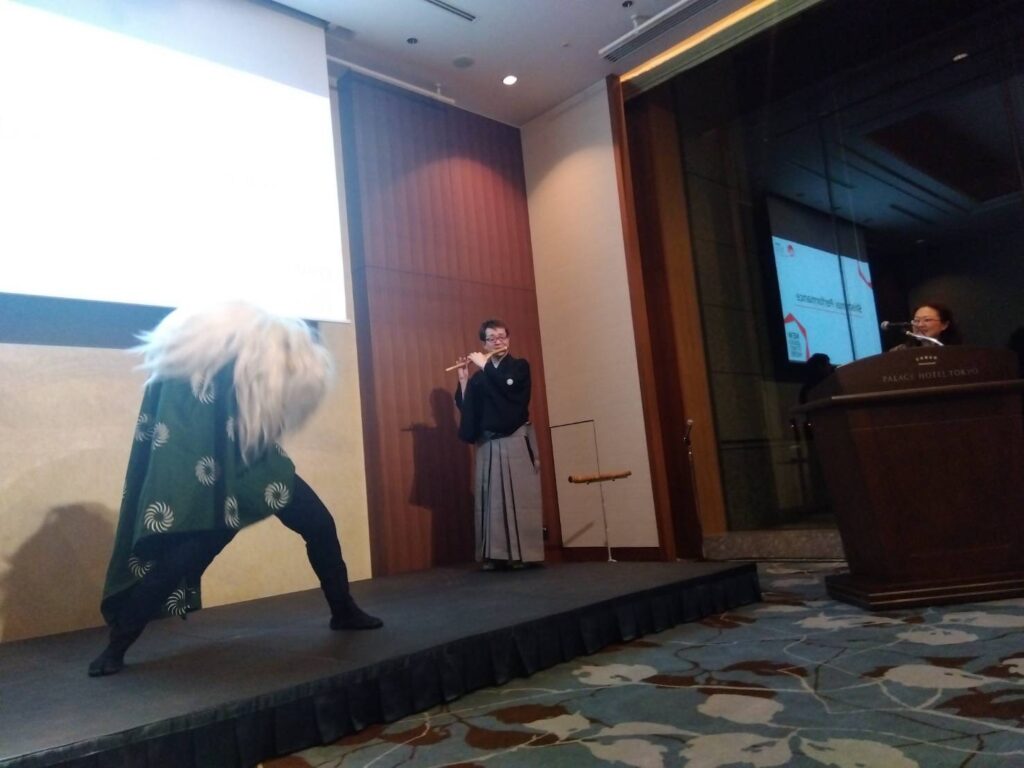
The performance began with an unexpected moment of stillness. As the lights dimmed and the doors opened, the sound of the shakuhachi (Japanese bamboo flute) filled the room, instantly sharpening the atmosphere.
During a scene in which the lion gently falls asleep, the shakuhachi performed Schubert’s “Lullaby”. By incorporating Western classical music, guests from different cultural backgrounds could immediately share the same understanding: the lion is resting.
Although the performance lasted only 20 minutes, the performers’ expressive skill and subtle humor made it a deeply memorable experience.
What Only MOTENAS Japan Can Deliver
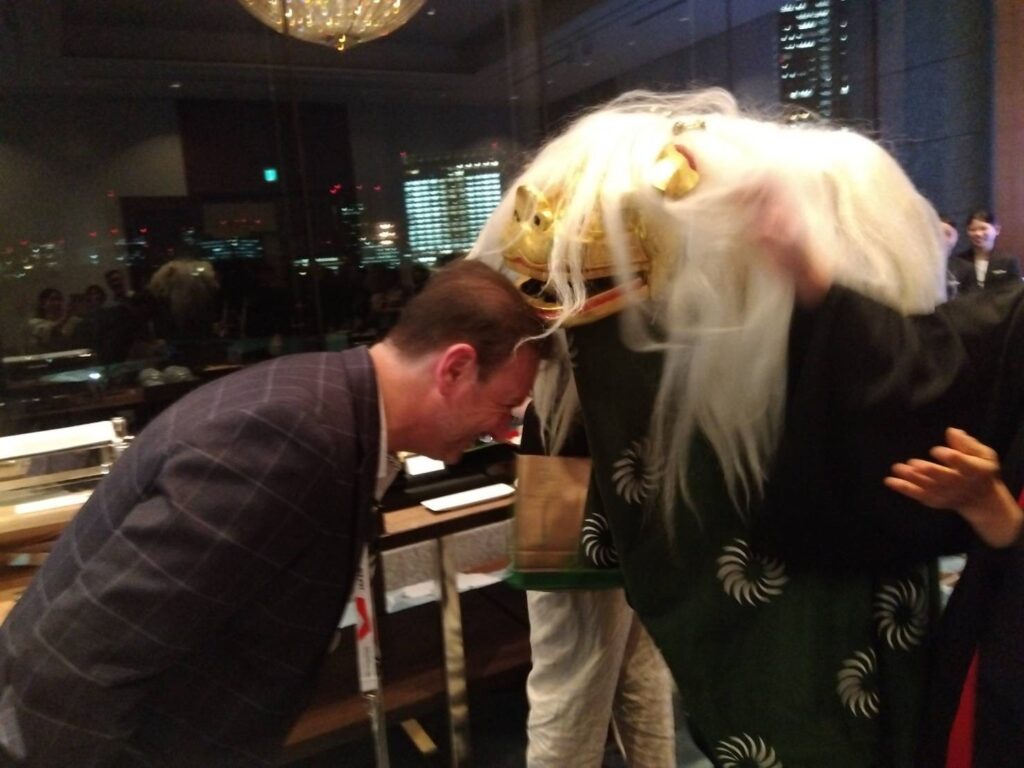
One of the key strengths of this experience was interpretation beyond simple translation. Rather than translating word-for-word, explanations were tailored to each guest’s cultural background and imagery, making the performance intuitive and accessible.
Examples included:
- A playful explanation of the Japanese wordplay between “kamu” (to bite) and “kami” (spirit or god)
- Comparing the shishi to dragons or unicorns, familiar mythical figures for Western audiences
Through these explanations, shishi-mai became more than a spectacle. It was clearly understood as a ritual conveying wishes for happiness, health, and protection.
The uniquely Japanese belief that being bitten by the shishi brings good fortune and wards off evil was explained in calm English narration, synchronized with the gentle rhythm of the shakuhachi.
Bringing Japanese Tradition Closer to Global Audiences
Instead of fast-paced party entertainment, the experience embraced a slow, dignified rhythm, allowing guests to fully immerse themselves in the moment.
From the preparation stage, we spoke directly with the performers to clarify what message mattered most for international audiences.
As a result, even with a theme that can be challenging to explain, we were able to create meaningful resonance within a short 20-minute program.
MOTENAS Japan provides one-stop support, from event planning and on-site coordination to full banquet setup.
By always standing in the client’s perspective, we deliver experiences designed to succeed and be remembered.
We are working day and night to spread Japan’s unique hospitality culture to people around the world. Please feel free to contact us for any inquiries regarding the reception and hospitality of guests visiting Japan.


