







There is no single lead time for booking a corporate event in Japan, but larger, more complex, or international events should generally begin planning earlier than small, flexible meetings.
The right lead time depends on your event size, complexity, date, and the services you need. Venue reservation windows can also vary.
Your timeline may also be affected by accommodation, transportation, AV, interpreters, catering, entertainment, and international guest logistics.
This guide explains when to start planning, what to book first, whether three months may be enough, and how timelines change for 100+ guests or international events.
- How to determine the right planning lead time based on your event size and complexity
- Which elements to secure first, from the venue and accommodation to AV and transportation
- When a three-month timeline may be workable—and when more preparation is advisable
- Why events with 100+ guests or international attendees often involve additional planning
- How peak seasons and venue reservation windows can affect when you can actually book
- What to prioritize if your corporate event in Japan is less than three months away
How Far in Advance Should You Book? Lead Times by Event Size
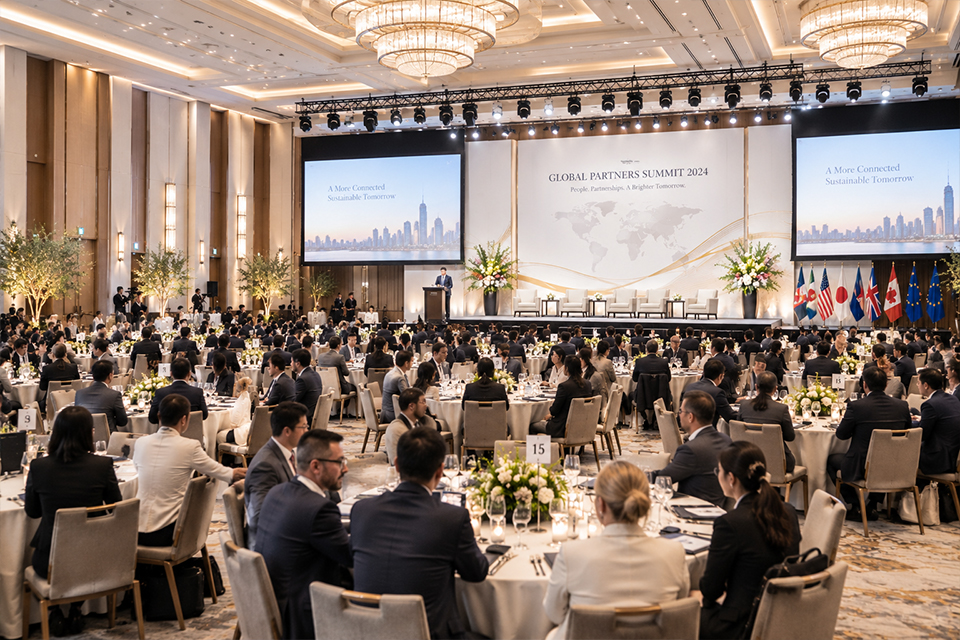
There is no single booking timeline that applies to every corporate event in Japan. A small, straightforward meeting may be possible on a relatively short timeline, while a large banquet, conference, or international event should generally enter the planning stage much earlier.
Official venue information also shows why a single rule is difficult to apply—some major properties in Tokyo accept banquet reservations up to a year in advance, while others open bookings much closer to the event date.
A practical starting point is to assess both event size and complexity:
| Event Type / Scale | Lead-Time Decision | Why More Lead Time May Be Needed |
| Small meeting | Shorter timelines may be workable; prioritize venue availability first, especially if dates are flexible. | Fewer guests, simpler room setup, and limited accommodation or production needs |
| Mid-size corporate event | Start planning earlier when dates or program requirements are fixed; confirm the venue before coordinating major services. | Venue layout, catering, AV, transportation, and guest logistics need coordination |
| 100+ guest event | Earlier planning becomes increasingly important; confirm suitable venue capacity and major guest logistics first. | Suitable venues are more limited, while accommodation, transportation, and guest management become more complex |
| Large international / MICE event | Begin planning as early as practical; identify the venue, accommodation, transportation, and other requirements with the most limited availability first. | Venue availability must be coordinated with accommodation, production, interpreters, transportation, international guests, and other suppliers |
These are planning categories rather than fixed booking deadlines. The right timeline depends not only on headcount but also on how many elements must work together.
For example, a 100-person reception with flexible dates and simple AV may be easier to arrange than a smaller executive event requiring a specific venue, interpreters, VIP transportation, and a customized cultural program. Some specialized experiences can also have their own long deadlines: the Japan National Tourism Organization’s business-events site lists an incentive experience at Zuiganji Temple with a six-month reservation deadline.
The key is therefore to start planning before your most restrictive requirement becomes unavailable. First define the approximate guest count, preferred dates, location, venue format, and major logistical or production requirements. You can then identify which elements need to be secured first—and which cannot yet be booked because their reservation window has not opened.
Source: JNTO Japan Meetings & Events – Reach Zen at Zuiganji Temple (Accessed: September 19, 2026)

What Should You Book First—and How Early?
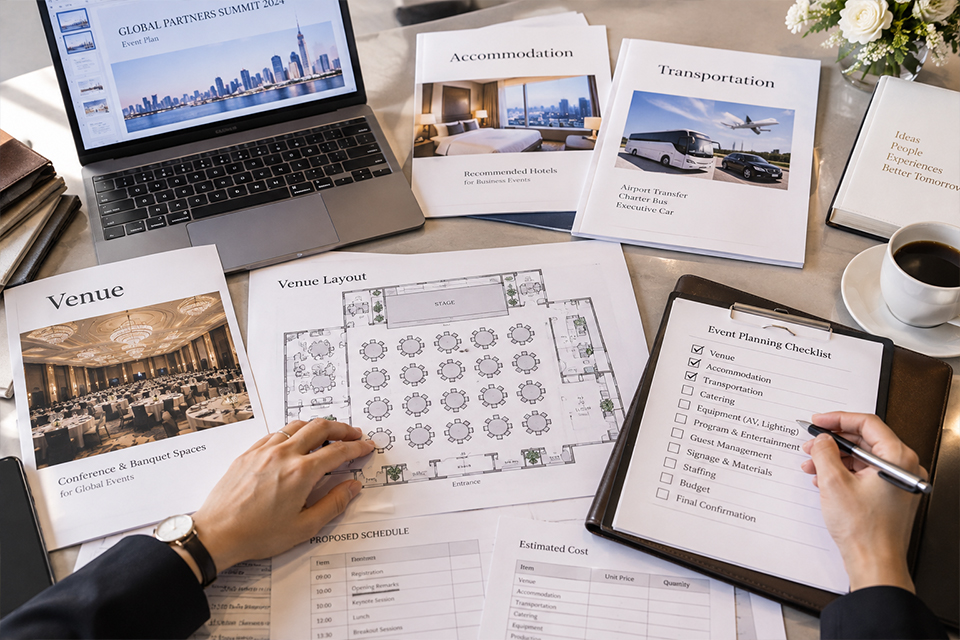
Start with the elements that determine the rest of the event—usually the venue and accommodation. Once the date, location, guest capacity, and basic event format are established, transportation, AV, interpreters, catering, and entertainment can be coordinated around them.
Rather than booking every service at the same time, prioritize according to availability, event requirements, and how strongly each element affects the rest of the plan.
| Element | Priority | When to Start | Why It Needs Priority |
| Venue | Highest | As early as practical | Determines date, capacity, layout, location, and many production options |
| Accommodation | High for overnight groups | Alongside or soon after venue planning | Large room blocks and preferred locations may have limited availability |
| Transportation | Depends on group size and itinerary | After key locations and schedule are defined | Vehicle type and quantity depend on guest movements |
| AV / Production | High for complex programs | Once the venue and program are taking shape | Stage, screens, lighting, sound, and load-in requirements must fit the venue |
| Interpreters | High when specialist language support is required | Once languages and program are known | Interpreter requirements depend on format, languages, and technical content |
| Catering | Usually coordinated with the venue | Once format and guest requirements are clearer | Menu, service style, allergies, and dietary requirements need coordination |
| Entertainment | Earlier for specific performers or customized programs | Once the program direction is established | Availability, venue restrictions, rehearsal, and technical requirements can affect feasibility |
Venue and Accommodation
The venue should usually be one of the first elements you investigate because it determines whether your preferred date, guest count, room layout, stage, AV setup, and event format are feasible.
Do not rely only on maximum capacity. Confirm the appropriate layout—such as banquet, classroom, or theater—and whether sufficient space remains for production and guest circulation.
For events involving international or out-of-town attendees, accommodation should be considered at the same stage. A hotel close to the venue can simplify transportation, while larger groups may need room blocks across one or more properties.
Starting your search early is important, but note that actual booking timing can vary by property—more on this later in the guide.
Transportation, AV, Interpreters, Catering, and Entertainment
These services do not all require the same lead time. Their priority depends on the size and complexity of your event.
Transportation planning should begin once arrival points, hotels, venues, and the event schedule are reasonably clear. AV and production should be addressed early when the program includes a large stage, multiple screens, professional lighting, live streaming, or performances.
For international events, identify interpreter and multilingual support requirements once the program and attendee languages are known. Catering planning should include allergies, vegetarian or vegan meals, religious dietary requirements, and service format.
Entertainment can also become an early priority when you need a specific performer, Japanese cultural experience, or customized program. Confirm availability together with performance space, setup time, rehearsal requirements, and technical needs rather than treating entertainment as a last-minute addition.
Is 3 Months Enough to Plan a Corporate Event in Japan?

Three months may be enough for some corporate events in Japan, but it depends on availability and complexity. A flexible, relatively simple event is more likely to be feasible within this timeframe than a large international event with fixed dates, extensive production, or multiple logistical requirements.
When Three Months May Be Enough
A three-month timeline may be workable when the event has a small or mid-size guest list, flexible dates or venue preferences, and a relatively simple program.
For example, planning may be more straightforward when accommodation requirements are limited, the venue can provide most catering and AV services in-house, and the event does not require extensive staging, interpretation, or customized entertainment.
Flexibility is particularly important. If your first-choice venue or date is unavailable, being able to consider another location, room configuration, or schedule can significantly increase the available options.
Three months should therefore be treated as a planning condition rather than a guarantee: availability still needs to be checked with each venue and supplier.
When You Should Start Earlier
Starting earlier is advisable when the event involves 100+ guests, fixed dates, premium or unique venues, substantial accommodation needs, or international attendees.
Events with complex production, interpretation, transportation, or customized programs may also require more preparation because several arrangements need to be coordinated in advance. Season can add another constraint, as discussed later in this guide.
The more requirements that are fixed, specialized, or dependent on one another, the less useful a three-month benchmark becomes. In these cases, begin planning as soon as the core event requirements are known.
When Should You Start Planning for 100+ Guests or International Attendees?
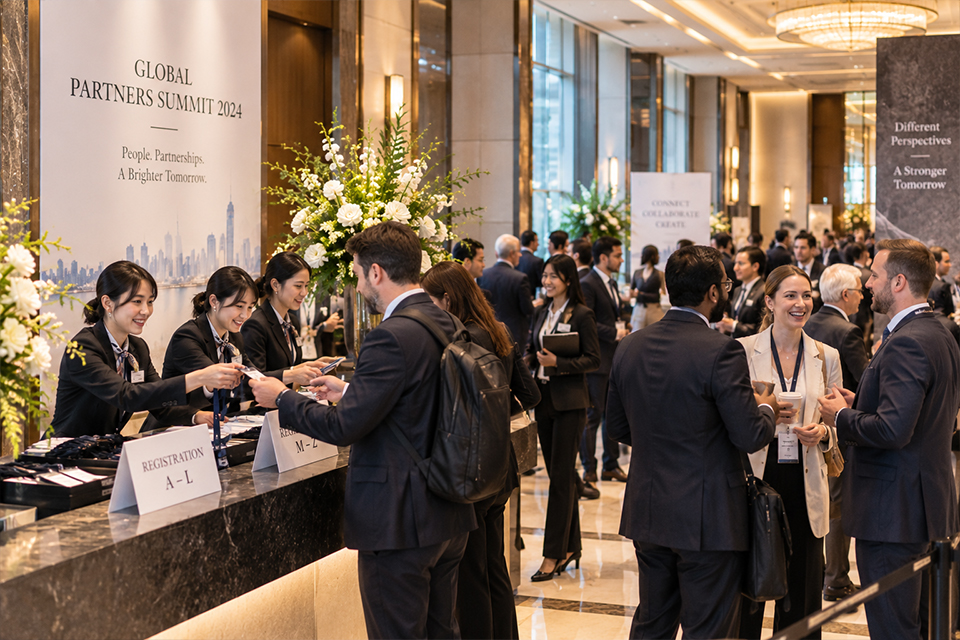
For events with 100+ guests or international attendees, start planning as soon as the core dates, approximate guest count, and event requirements are known. The main challenge is not simply the number of arrangements involved, but how strongly those arrangements depend on one another.
For example, the venue decision affects accommodation and transportation planning. The room configuration influences staging, AV, registration, and guest circulation. The event program can determine interpretation requirements, while entertainment or cultural experiences may affect the venue layout, technical setup, and schedule.
International attendees add further dependencies. Arrival and departure patterns can influence airport transfers and hotel arrangements, while dietary, language, and VIP requirements may affect catering, communication, and on-site operations.
A published MOTENAS JAPAN case study illustrates this complexity. For an international economic forum with approximately 300 government officials and business leaders, the program involved venues in Kyoto, dedicated transportation for VIPs and dignitaries, security arrangements, and a private reception. This example shows how large international events can require several operational elements to be coordinated around the same program.
At 100+ guests, changes to one part of the plan can also have a wider impact. Changing the venue may require transportation plans to be reconsidered; changing the program may affect AV or interpretation; and changing the guest count may affect room configuration, accommodation, and catering.
The key is therefore to identify these dependencies before individual arrangements are finalized. Rather than focusing only on a single “book X months ahead” rule, define the requirements that affect multiple parts of the event and determine which decisions need to be made first.
-1-300x200.png)
How Do Season and Venue Booking Windows Affect Your Timeline?
Season and reservation rules can affect your timeline in different ways. Busy travel periods can put additional pressure on accommodation and transportation, while individual venues may not accept reservations until a defined period before the event. Starting early is therefore useful even when you cannot yet make every booking.
How Do Peak Seasons and Holidays Affect Availability?
If your event brings attendees from overseas or other parts of Japan, consider the travel season as well as venue availability.
The Japan National Tourism Organization (JNTO) identifies New Year, Golden Week, and the summer vacation period around Obon as major peak travel periods, when transportation and accommodation can become crowded or fully booked.
Seasonal tourism can matter as well. Popular travel periods such as cherry blossom season and autumn foliage season can increase demand in major destinations, adding another factor to accommodation and transportation planning.
For a corporate event, this does not mean that every ballroom will necessarily be unavailable during these periods. Instead, it means that the overall event logistics may become more restrictive. Hotel rooms, trains, flights, charter transportation, and sightseeing or cultural programs for international attendees may all need to be considered alongside the venue.
If your dates overlap with a major holiday or popular travel season, identify these dependencies early rather than focusing on the event space alone.
Source: JNTO – FAQ: When is peak travel season? (Accessed: September 19, 2026)
Why Can’t You Always Book as Early as You Start Planning?
Planning start, reservation opening date, and booking deadline are three different things. You can define your requirements and shortlist venues well in advance, but a venue may not yet be accepting reservations for your event date.
Official booking policies illustrate how these windows can differ:
| Venue / Facility | Published Booking Window |
| Hotel Chinzanso Tokyo | The standard booking window for banquet or meeting space is one year, with earlier consultation recommended for large meetings or banquets |
| Hotel New Otani Tokyo | Banquet reservations are generally accepted from one year before the event date, with consultation available for large-scale events |
| Tokyo Metropolitan Small and Medium Enterprise Support Center Event Space | Reservations are available up to nine months in advance |
Source: Hotel Chinzanso Tokyo – FAQ (Accessed: September 19, 2026)
Source: Tokyo Metropolitan Small and Medium Enterprise Support Center – Event Space (Accessed: September 19, 2026)
Source:Hotel New Otani Tokyo – Meetings & Banquets FAQ (Accessed: September 19, 2026)
These official examples show why there is no single reservation opening date for corporate event venues in Japan.
It is therefore important to distinguish between three stages:
| Stage | What It Means |
| Planning start | Define dates, guest count, budget, venue requirements, accommodation, production, and logistics |
| Reservation opening date | The earliest date a specific venue or service allows you to make a reservation |
| Booking deadline | The latest point at which a venue or service will accept a booking, subject to availability and its own rules |
Starting early is still valuable because it gives you time to research suitable venues, compare requirements, prepare alternatives, and identify when reservations actually open. Rather than assuming that “earlier always means bookable,” check the booking policy of each venue and supplier you are considering.
What If You Have Less Than 3 Months?

A corporate event in Japan may still be possible with less than three months to plan, but flexibility becomes more important. The first step is to identify what is already unavailable or difficult to arrange, then prioritize the elements that determine whether the event can proceed.
Start with the date, venue, and guest count. Confirm whether a suitable space is available for the required layout before investing time in detailed production or entertainment planning. If international attendees need accommodation, check hotel availability at the same stage.
Next, secure the services that are essential to the event. Depending on the program, these may include transportation, AV and technical support, interpreters, catering, or specific entertainment. Focus first on requirements that have limited substitutes or affect several other arrangements.
With a short timeline, be prepared to stay flexible about:
- Venue or room choice
- Event date or start time
- Hotel location
- Production scale and customization
- Specific performers or cultural experiences
- Transportation arrangements
Avoid adding unnecessary complexity once the core arrangements are confirmed. A simpler program using available venue facilities and services may be more practical than trying to reproduce an event concept designed for a much longer planning period.
Most importantly, do not assume that being inside a venue’s normal reservation window means suitable space is still available. Contact venues and essential suppliers promptly, confirm what can realistically be secured, and build the event around those confirmed options.
When Should You Contact a Corporate Event Planner in Japan?
Contact a corporate event planner as soon as your approximate dates, guest count, and core event requirements are known—especially for large, international, or logistically complex events. You do not need to wait until every detail has been finalized.
Early consultation can help identify which arrangements need priority, whether your preferred venue and schedule are realistic, and which requirements can be finalized later. This is particularly useful when coordinating 100+ guests, accommodation, transportation, interpreters, AV and production, catering, entertainment, or Japanese cultural experiences.
It can also help when planning from overseas, where communicating with multiple Japanese venues and suppliers may add complexity to the process.
MOTENAS JAPAN can support corporate events in Japan with venue coordination, guest logistics, bilingual assistance, entertainment, and cultural experiences. Share your approximate event date, location, guest count, venue requirements, and program ideas to begin identifying the next steps.
The earlier the core requirements are clear, the more effectively available options can be compared and coordinated.
We are working day and night to spread Japan’s unique hospitality culture to people around the world. Please feel free to contact us for any inquiries regarding the reception and hospitality of guests visiting Japan.

