




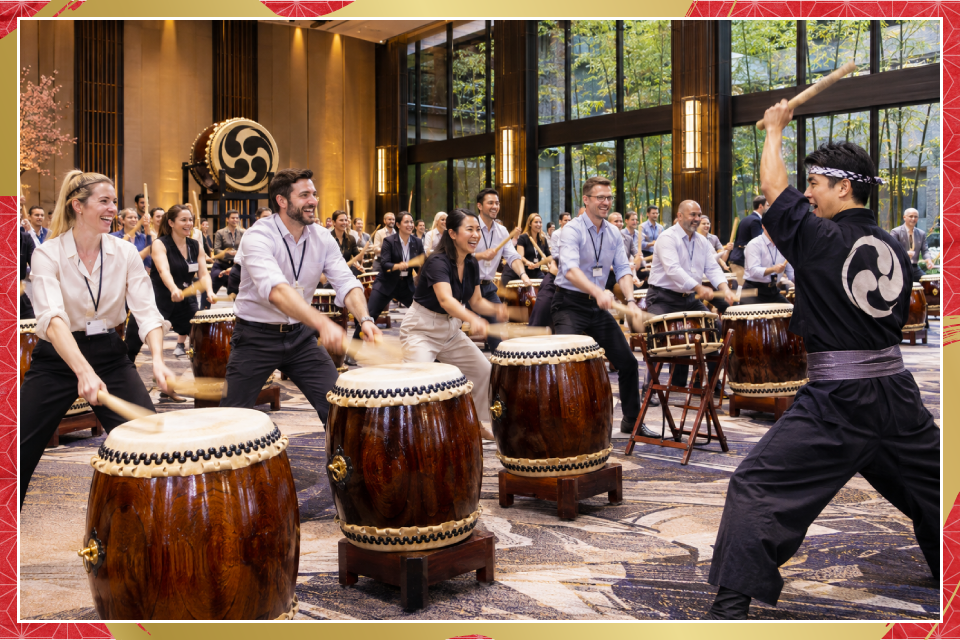

Planning a corporate taiko drumming experience in Japan involves more than choosing an activity. Group size, workshop costs, venue requirements, and scheduling all affect the arrangements.
Private taiko workshops can be organized for corporate groups, including large international teams.
This guide explains available formats, pricing examples, group logistics, and the key details to confirm before requesting a proposal.
- Whether private taiko workshops are available for corporate groups
- Costs, group sizes, and workshop durations
- How workshops for 50–100 participants are organized
- Venue, equipment, and language requirements
- Real corporate taiko experiences organized by MOTENAS JAPAN
- What to confirm before requesting a quote
Can You Organize a Private Taiko Drumming Workshop in Japan?
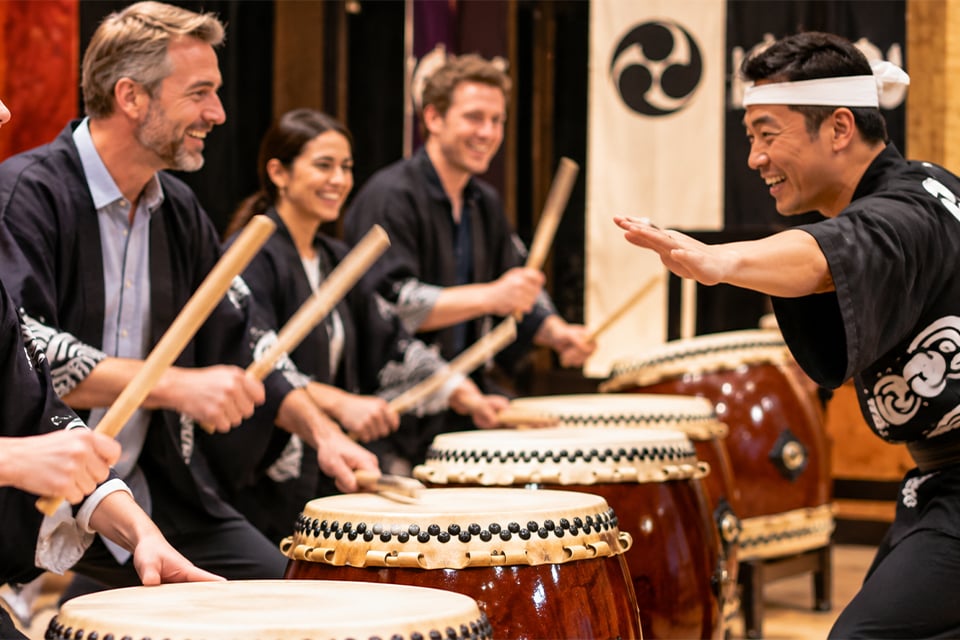
Yes, private taiko drumming workshops can be arranged for corporate groups in Japan, including international teams with no previous drumming experience. These hands-on sessions combine professional instruction, basic rhythm practice, and group performances. The format can be adapted for corporate retreats, incentive trips, and other business events.
What Is a Corporate Taiko Team-Building Workshop?
A corporate taiko workshop is an interactive Japanese drumming experience led by professional instructors. Participants learn how to hold bachi (drumsticks), maintain proper posture, and play simple rhythms before performing together.
Unlike a traditional taiko performance, where guests primarily watch professional drummers, a workshop allows participants to actively create music. Depending on the group size and available equipment, everyone may play together or practice in smaller groups.
Source: Taiko Center — Private Lessons (Accessed: November 2, 2026)
What Types of Corporate Events Are Suitable for Taiko Drumming?
Taiko workshops can be incorporated into corporate retreats, incentive trips, international team-building events, company kickoffs, and corporate celebrations.
For example, retreats may focus on collaborative rhythm exercises, while incentive trips can emphasize Japanese cultural experiences. Company kickoffs may include a group performance as a shared activity.
MOTENAS JAPAN offers private taiko drumming experiences in Japan that can be customized to suit different corporate objectives, group sizes, and event schedules.
Source: MOTENAS JAPAN — Taiko Drumming (Accessed: November 2, 2026)
How Much Does Taiko Drumming Team Building Cost in Japan?

The total cost of a corporate taiko drumming workshop depends on the number of participants, session duration, venue requirements, and additional services. Per-person workshop fees alone may not reflect the full event budget, particularly for groups of 50–100 participants.
Published Prices for Corporate Taiko Workshops
Published prices from Japanese taiko workshop providers offer useful reference points for corporate event planning.
Yume Academy lists the following prices for corporate programs:
| Item | Published Price |
| 60-minute workshop | ¥9,500 per person |
| 90-minute workshop | ¥11,500 per person |
| Interpreter (60 minutes) | ¥13,000 |
| Interpreter (90 minutes) | ¥16,000 |
A venue fee applies if a venue needs to be arranged. The published information does not specify whether these prices include tax.
YURANZA’s brochure, marked © 2024, includes a sample quotation of ¥553,000 before tax for a group of 30 participants. This is an illustrative quotation from the brochure, not a confirmed current price.
The sample quotation includes the following items:
| Cost Item | Sample Amount |
| Program design and instructor fees | ¥150,000 |
| Participant fees (minimum 10 participants) | ¥300,000 |
| Venue rental | ¥50,000 |
| Interpreter | ¥50,000 |
| Drinking water | ¥3,000 |
| Total (before tax) | ¥553,000 |
These figures are examples from individual providers, not industry-wide averages or confirmed MOTENAS JAPAN prices.
Source:
YURANZA — Taiko Workshop Brochure (Accessed: October 30, 2026)
Yume Academy — Corporate Programs (Japanese) (Accessed: October 30, 2026)
What Additional Costs Should Corporate Planners Expect?
For a corporate workshop involving 50–100 participants, planners should request an itemized quotation covering both the activity and event logistics.
Potential additional costs include venue rental, interpreter services, instructor fees, drum transportation, equipment setup, and travel expenses for instructors.
The final budget may also depend on whether participants share drums, how many instructors are required, and whether the workshop takes place at a dedicated studio or an external event venue.
A customized quotation is the most reliable way to establish the total cost for a specific corporate group.
Can 50–100 People Join a Corporate Taiko Workshop?
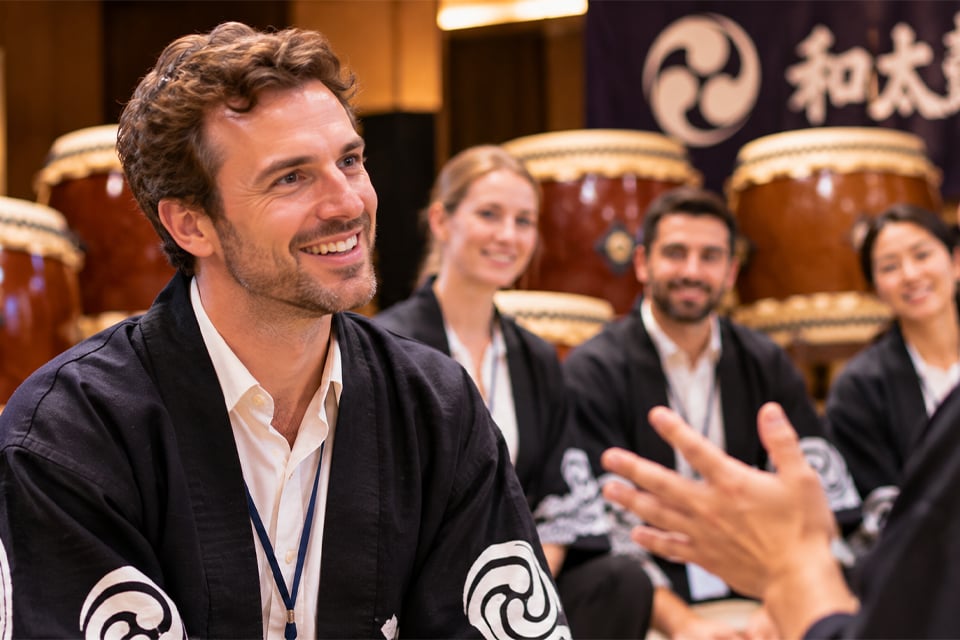
Yes, corporate taiko drumming workshops can accommodate groups of 50–100 participants, provided the program is designed around the available drums, instructors, venue space, and event schedule.
Large-group workshops may use shared instruments, smaller practice groups, or rotating sessions to give participants an opportunity to play.
How Are Large-Group Taiko Workshops Organized?
For groups of 30–100 participants, Taiko Center often assigns two or three people per drum. This arrangement allows participants to take turns practicing rhythms without requiring a separate instrument for everyone.
Yume Academy’s taiko experience booking page includes a reservation category for groups of 81–500 participants, although the specific arrangements for corporate events should be confirmed separately.
For corporate groups of 50–100, organizers can consider dividing participants into smaller teams, rotating between drums, or arranging a collaborative performance at the end of the session.
The most suitable format depends on whether the objective is to maximize individual playing time, encourage interaction between departments, or create a shared group experience.
Source:
Yume Academy — Taiko Experience Booking (Japanese) (Accessed: October 30, 2026)
Taiko Center — Private Lessons (Accessed: October 30, 2026)
How Many Drums, Instructors, and Rooms Are Needed?
The required number of drums and instructors depends on the workshop format rather than participant numbers alone.
For example, a group of 60 participants sharing one drum between two or three people would need approximately 20–30 drums. This is an illustrative calculation based on Taiko Center’s published sharing arrangement, not a universal equipment requirement.
A taiko workshop program published by Saitama Prefecture accommodates 10–45 participants and specifies four staff members for a group of 45. This is a provider-specific staffing arrangement, not a standard instructor-to-participant ratio for corporate workshops.
Venue capacity also matters. Taiko Center’s Aoyama facilities include three studio spaces with published capacities of approximately 50, 25, and 25 participants. These figures should not be interpreted as a single room accommodating 100 people.
For a group of 50–100, planners should confirm the number of available drums, instructor and support staff arrangements, room capacities, and whether participants can perform together or need separate sessions.
Source:
Taiko Center — Private Lessons (Accessed: October 30, 2026)
Taiko Center — Tokyo Studios (Accessed: October 30, 2026)
Saitama Prefecture — Taiko Workshop Program (Japanese) (Accessed: October 30, 2026)
Planning Taiko Team Building for 50–100 Corporate Guests?
MOTENAS JAPAN can help explore suitable workshop formats, venue arrangements, and equipment requirements for your group.
How Long Does a Corporate Taiko Workshop Take?
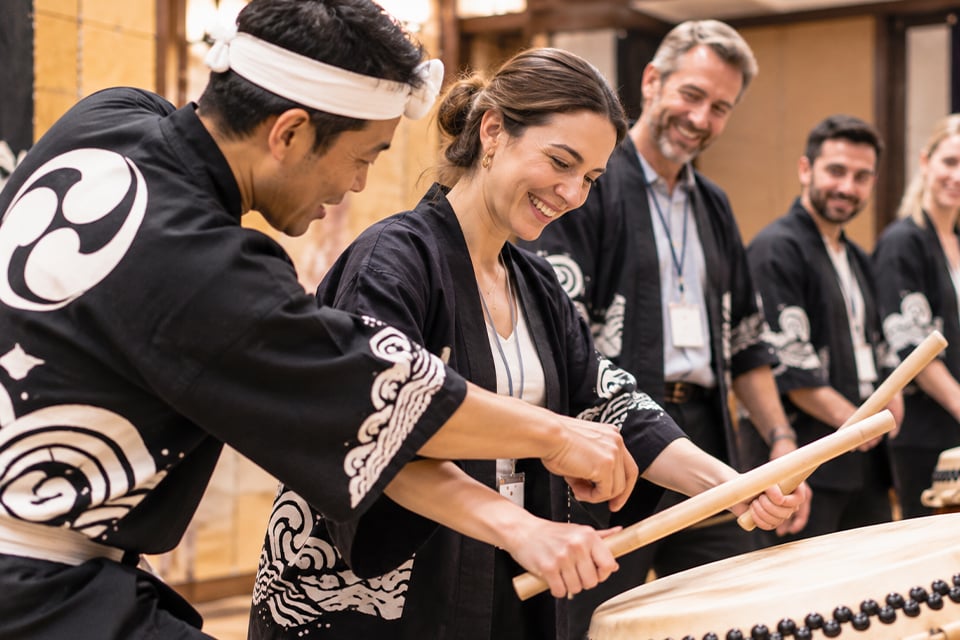
Corporate taiko drumming workshops typically last between 60 minutes and three hours, depending on the program format, group size, and activities included. For groups of 50–100 participants, organizers should also allow additional time for preparation and transitions.
Typical Workshop Durations: 60, 90, and 120+ Minutes
MOTENAS JAPAN lists approximately 60 minutes as the standard duration for its taiko drumming experience. Other providers offer longer sessions, depending on the amount of practice, group activities, and performance preparation involved.
The following durations provide useful planning benchmarks:
- 60 minutes: A shorter workshop focused on basic drumming techniques, simple rhythms, and a collaborative group performance. This format may suit corporate events with limited time.
- 90 minutes: Additional time may allow for team-based rhythm challenges, small-group presentations, or more extensive practice. These activities are possible program options, not guaranteed components of every 90-minute workshop.
- 2–3 hours: Taiko Center recommends two- to three-hour sessions for corporate team-building classes, allowing time for groups to practice and perform for one another.
For larger groups, the workshop duration should also account for drum-sharing arrangements and the time needed to move between activities.
Sources:
- MOTENAS JAPAN — Taiko Drumming (Accessed: October 30, 2026)
- Yume Academy — Corporate Programs (Japanese) (Accessed: October 30, 2026)
- Taiko Center — Private Lessons (Accessed: October 30, 2026)
- YURANZA — Taiko Workshop Brochure (Accessed: October 30, 2026)
How Much Time Should Be Allowed for the Entire Event?
The advertised workshop duration does not necessarily include all the time required for a corporate event.
Organizers should allow additional time for participant registration, movement between rooms, changing clothes if necessary, equipment preparation, group photography, and equipment removal.
For workshops involving 50–100 participants, transitions may take longer when guests are divided into smaller groups or share instruments.
If the taiko session is part of a larger corporate program, such as a conference or incentive trip, the schedule should also account for transportation, meal arrangements, and transitions to other activities.
Confirming the complete event timeline with the organizer helps avoid scheduling conflicts and ensures sufficient time for participants to enjoy the experience.

What Happens During a Japanese Taiko Team-Building Session?
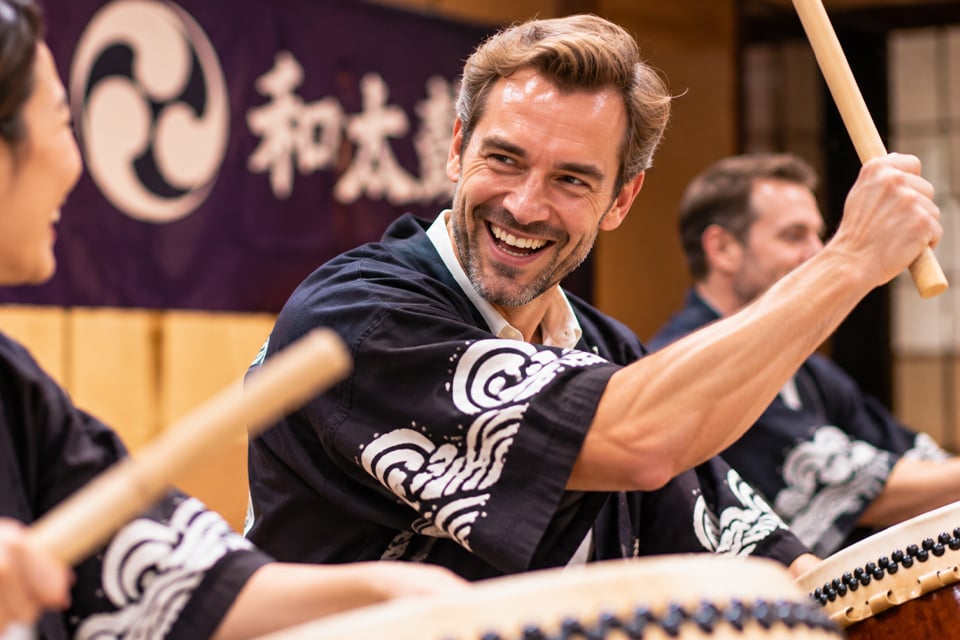
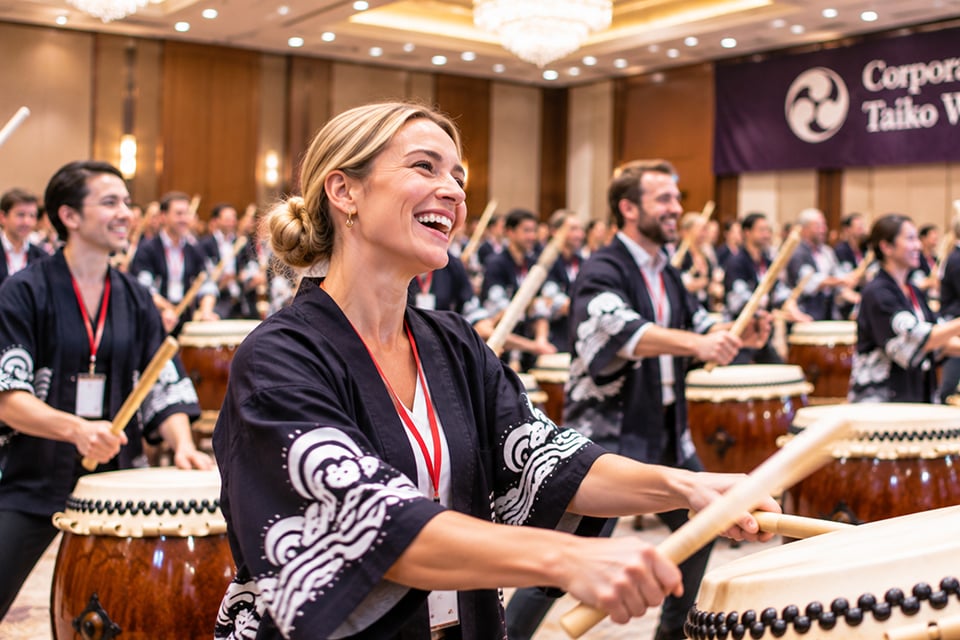
A corporate taiko drumming workshop typically progresses from an instructor demonstration to basic rhythm practice and a collaborative group performance. For groups of 50–100 participants, the session may also include smaller practice groups or drum-sharing arrangements.
Introduction and Professional Taiko Demonstration
The workshop generally begins with an introduction to Japanese taiko drumming and a demonstration by a professional instructor.
Participants observe basic playing techniques, rhythmic patterns, and the coordinated movements involved in taiko performance. This introduction helps beginners understand what they will practice during the session.
Depending on the program, the demonstration may take place at the beginning or toward the end of the workshop.
Learning Basic Drumming Techniques
Participants then learn how to hold bachi (drumsticks), maintain a stable posture, and produce clear sounds using basic striking techniques.
The instructor introduces simple rhythmic patterns, which participants repeat individually or together.
For larger corporate groups, instructors may divide participants into smaller teams or arrange for several people to share a drum.
No previous musical experience is generally required for beginner-oriented workshops.
Group Rhythm Practice and Collaborative Performance
Once participants become familiar with the basic techniques, they begin practicing coordinated rhythms as a group.
Instructors may divide participants into teams, assign different rhythmic patterns, or guide everyone toward a shared performance.
The session can conclude with participants combining what they have learned into a collaborative piece, creating an opportunity to practice listening, timing, and coordination.
MOTENAS JAPAN has also organized corporate taiko workshops that combine professional demonstrations, basic rhythm practice, and collaborative group performances, as illustrated in the case study below.
Example Schedule for a 60–90-Minute Taiko Workshop
| Activity | Approximate Duration | What Participants Do |
| Introduction and instructor demonstration | 10–15 minutes | Learn about taiko and watch a professional demonstration |
| Basic drumming techniques | 15–20 minutes | Practice posture, drumstick handling, and basic rhythms |
| Group rhythm practice | 15–20 minutes | Practice coordinated rhythms in small groups |
| Collaborative performance | 15–25 minutes | Combine the learned rhythms into a group performance |
| Closing and photography | 5–10 minutes | Conclude the workshop and take group photographs |
Note: The estimated durations add up to approximately 60–90 minutes. This is an editorial model schedule intended to illustrate a possible workshop structure, not a published program offered by a specific provider. Some providers may also schedule the professional demonstration at the end of the session.
Source: Saitama Prefecture — Taiko Workshop Program (Japanese) (Accessed: October 30, 2026)
Why Is Taiko Drumming Suitable for Corporate Team Building?
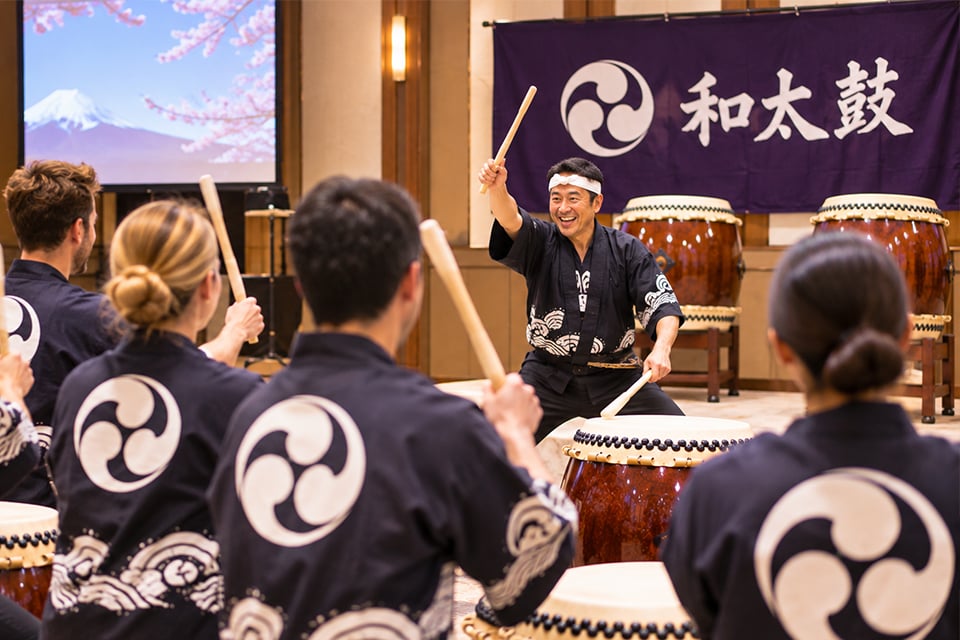
Taiko drumming offers corporate groups a hands-on activity that encourages participants to listen, coordinate their movements, and work toward a shared goal. For international teams of 50–100 people, the combination of rhythm, physical movement, and group participation can create opportunities for interaction beyond everyday workplace communication.
Encouraging Communication and Collaboration
Playing taiko as a group requires participants to pay attention to timing, follow visual cues, and adjust their rhythms to match others.
Unlike activities that depend heavily on verbal discussion, taiko drumming allows participants to communicate through sound, movement, and observation.
For larger corporate groups, instructors may divide participants into smaller teams to practice different rhythms before bringing them together for a collaborative performance.
This format provides opportunities for participants to practice coordination and cooperation while working toward a common objective.
Creating a Shared Experience for International Teams
Taiko drumming can be particularly suitable for international corporate groups because participants do not need advanced Japanese-language skills or previous musical experience to take part in beginner-oriented activities.
Colleagues from different departments, countries, and professional backgrounds can participate in the same cultural experience.
For groups of 50–100, a final collaborative performance can provide a shared conclusion to the workshop, whether participants have practiced together or in smaller teams.
Rather than guaranteeing measurable improvements in teamwork, taiko workshops offer a practical setting for shared participation, communication, and cultural engagement.

Where Can You Arrange Taiko Drumming Team Building in Japan?
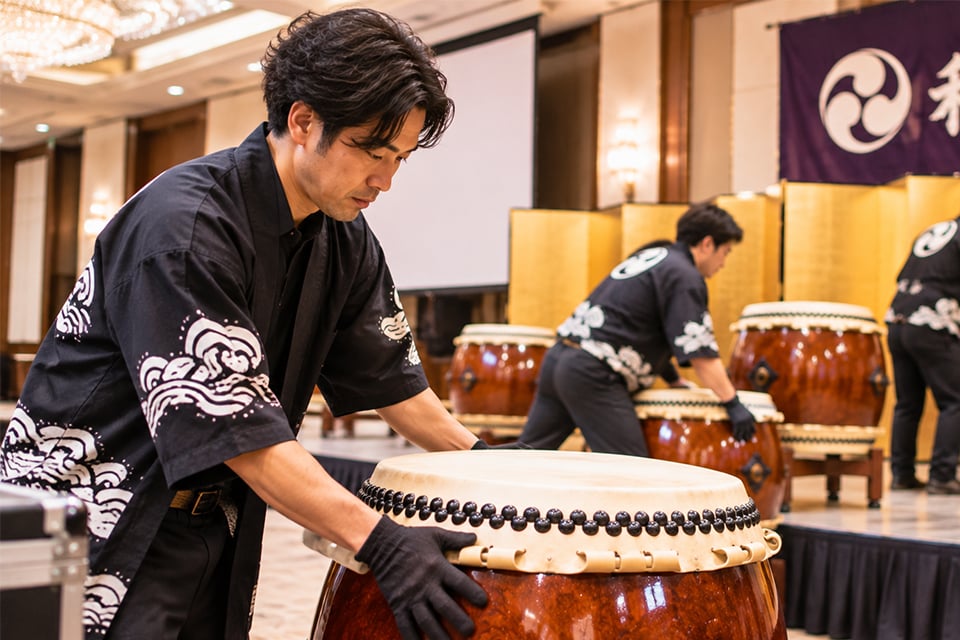
Corporate taiko drumming workshops can be arranged in Tokyo, Kyoto, Osaka, and other locations in Japan, depending on instructor availability, group size, and venue requirements. For groups of 50–100 participants, choosing between a dedicated taiko studio and an external event venue is an important planning decision.
Taiko Workshops in Tokyo
Tokyo offers several options for corporate taiko workshops, including dedicated studios and event venues.
Taiko Center operates studios in Aoyama and Akihabara, providing locations for taiko lessons and group activities.
For corporate groups of 50–100 participants, organizers should confirm whether the available studio space can accommodate everyone simultaneously or whether separate groups and sessions are necessary.
Source: Taiko Center — Tokyo Studios (Accessed: October 30, 2026)
Taiko Workshops in Kyoto and Osaka
Taiko workshops can also be incorporated into corporate events and incentive travel programs in Kyoto and Osaka.
Taiko Center operates studios in both cities, offering potential options for groups interested in combining Japanese drumming with other cultural activities.
For larger corporate groups, venue capacity, equipment availability, and transportation arrangements should be confirmed before finalizing the program.
Can Taiko Instructors Visit Hotels or Corporate Event Venues?
Yes, some taiko providers offer workshops and performances outside their regular studios. This can be useful for corporate groups that want to incorporate taiko into an existing conference, hotel event, or incentive travel itinerary.
Taiko Center indicates that classes and performances can be arranged at locations such as temples and hotels, in addition to its studios.
YURANZA’s workshop brochure also lists temples and shrines, halls and cultural facilities, and gymnasiums or arenas as possible venue types.
However, availability depends on the venue’s rules, noise restrictions, floor conditions, available space, and equipment transportation requirements. Not every hotel or corporate event venue can accommodate live taiko drumming.
Sources:
- Taiko Center — Private Lessons (Accessed: October 30, 2026)
- YURANZA — Taiko Workshop Brochure (Accessed: October 30, 2026)

What Should Corporate Planners Consider When Choosing a Taiko Venue?
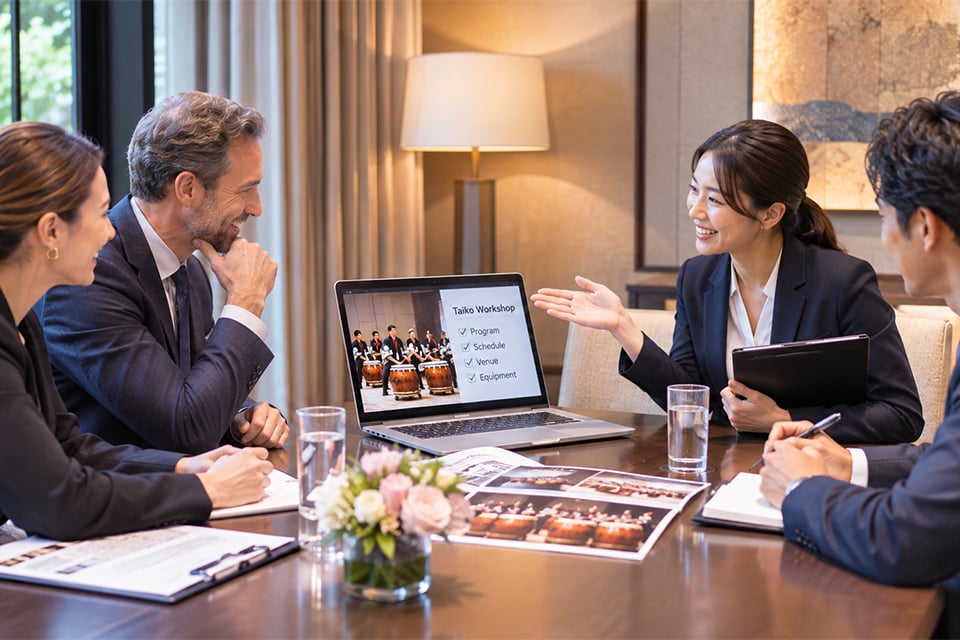
Choosing a suitable venue is essential for corporate taiko workshops involving 50–100 participants. Organizers should consider noise restrictions, available space, equipment transportation, and participant comfort before confirming the location.
Venue rules can also affect which activities are possible. At one MOTENAS JAPAN event in a Tokyo hotel, a planned karate demonstration was replaced with a shishi-mai performance because venue regulations prevented it from being performed safely.
Source: MOTENAS JAPAN — Shishi-mai Event Report (Accessed: October 30, 2026)
Noise Restrictions and Acoustic Requirements
Taiko drums produce powerful sounds and vibrations, making acoustic conditions an important consideration for corporate workshops.
Yume Academy specifies that a soundproof environment is required for its taiko programs. A taiko workshop program published by Saitama Prefecture also notes that drum sounds may lead to noise complaints.
For events at hotels, conference centers, or other shared facilities, planners should confirm whether live drumming is permitted and whether any restrictions apply to performance times, sound levels, or room locations.
Sources:
- Yume Academy — Corporate Programs (Japanese) (Accessed: October 30, 2026)
- Saitama Prefecture — Taiko Workshop Program (Japanese) (Accessed: October 30, 2026)
Space, Equipment, and Transportation
Corporate taiko workshops require sufficient space for drums, participants, instructors, and safe movement between instruments.
Equipment transportation can also affect venue suitability and event costs. For example, a specific taiko workshop program published by Saitama Prefecture requires parking space for approximately two small trucks and lists a total drum transportation fee of ¥50,000.
These are conditions for that particular program, not standard requirements or fees for all corporate taiko workshops.
Source: Saitama Prefecture — Taiko Workshop Program (Japanese) (Accessed: October 30, 2026)
For groups of 50–100, organizers should also check loading access, elevator dimensions, and whether equipment can be moved safely into the event space.
Corporate planners should also confirm whether instructor travel, accommodation, and instrument transportation are included in the quotation or charged separately.
Accessibility and Participant Comfort
A suitable venue should allow participants to move comfortably and safely throughout the workshop.
For international corporate groups, planners should consider step-free access, accessible restrooms, seating for participants who need breaks, and sufficient space between drums.
Participants should be encouraged to wear comfortable clothing that allows easy arm and body movement.
If the group includes guests with different physical abilities or participation preferences, organizers should discuss suitable arrangements with the workshop provider in advance.
For groups of 50–100, clear instructions and an appropriate room layout can also help participants move between activities without unnecessary congestion.

How MOTENAS JAPAN Organizes Corporate Taiko Team Building in Japan
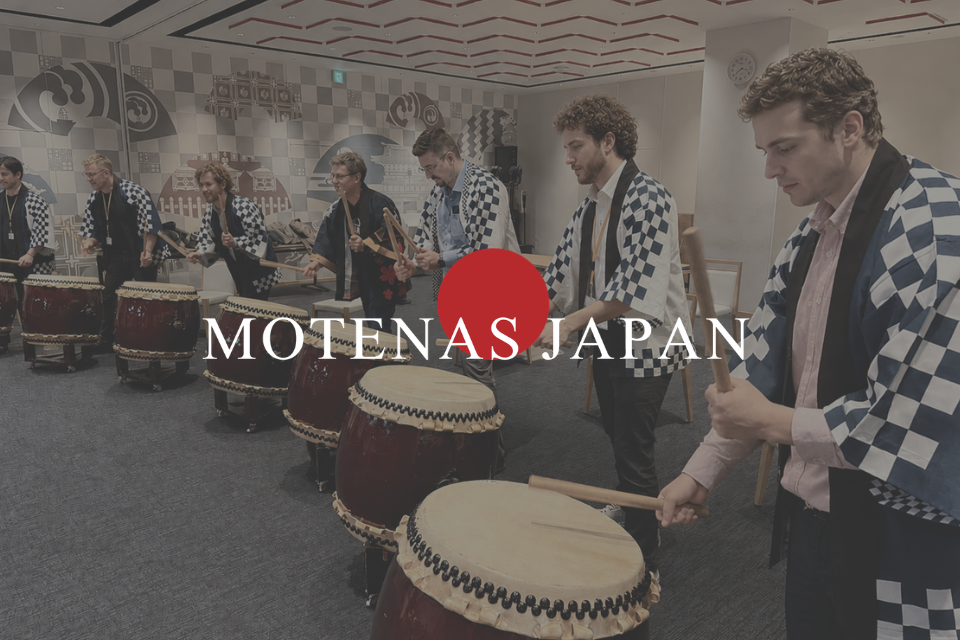
MOTENAS JAPAN organizes customized corporate taiko drumming experiences that can be combined with other Japanese cultural activities. Its past incentive travel programs demonstrate how taiko workshops can fit into multi-activity itineraries for international corporate groups.
Corporate Taiko Team Building at Kanda Myojin Shrine
MOTENAS JAPAN organized a corporate cultural experience at Kanda Myojin Shrine in Tokyo, combining a shrine visit with Japanese cultural activities, including karate, calligraphy, and taiko drumming.
Participants took part in different activities before coming together for a final taiko session. This structure allowed the group to experience several aspects of Japanese culture while concluding the program with a shared activity.
The taiko workshop included professional instruction and opportunities for participants to practice rhythms together.
This case illustrates how taiko drumming can serve as a collaborative finale within a broader corporate team-building program.
Taiko Drumming and Japanese Cultural Experiences in Toyosu
Another MOTENAS JAPAN incentive travel program combined taiko drumming, sushi making, calligraphy, and a glass factory visit into a two-day cultural itinerary in Tokyo.
On the first day, participants experienced taiko drumming in Toyosu, learning basic rhythms before working together to perform a piece.
On the second day, participants were divided into two groups. One group joined a calligraphy workshop, while the other visited a glass factory. Both groups reunited for lunch afterward.
This example demonstrates how taiko can be incorporated into a broader corporate incentive program alongside other Japanese cultural experiences.
Customized Cultural Programs for International Corporate Groups
These examples demonstrate how taiko drumming can be incorporated into customized corporate programs rather than offered only as a standalone workshop.
At Kanda Myojin Shrine, the program combined active experiences such as karate and taiko drumming with the quieter, more focused practice of calligraphy.
The itinerary also brought participants together after separate activities, creating a shared conclusion to the experience.
Similarly, the Toyosu program combined group drumming with other cultural experiences across two days, including activities organized for separate groups.
For international corporate groups, these formats offer practical options for balancing active and reflective activities, smaller-group participation, and shared experiences within an event schedule.
Create a Customized Japanese Cultural Team-Building Experience
Combine taiko drumming with calligraphy, martial arts, sushi making, or other Japanese cultural activities to create a customized experience for your corporate group. MOTENAS JAPAN can help coordinate the program around your event objectives, preferred location, schedule, and participant requirements.
What Should Corporate Planners Confirm Before Booking?
Before booking a corporate taiko drumming workshop for 50–100 participants, planners should confirm the group size, workshop format, budget, language support, and venue requirements. Clarifying these details early helps ensure the program fits the event objectives and schedule.
Group Size, Program Format, and Equipment
Confirm the expected number of participants and whether everyone will play simultaneously or rotate between smaller groups.
Ask how many drums will be available, whether instruments will be shared, and how many instructors or support staff will be assigned.
For groups of 50–100, it is also important to establish whether the workshop will include a professional demonstration, team-based activities, or a final collaborative performance.
Budget, Language Support, and Scheduling
Request an itemized quotation covering workshop fees, venue rental, equipment transportation, and any additional services.
Confirm whether instruction is available in English or whether an interpreter will be required.
Planners should also check the total event duration, instructor availability, booking deadlines, cancellation terms, and the deadline for confirming the final participant count.
Venue Approval, Safety, and Event Coordination
Before confirming the venue, check whether live taiko drumming is permitted and whether any noise restrictions apply.
Confirm that the space provides sufficient room for participants and instruments, appropriate ceiling height, safe floor conditions, and suitable loading access.
Accessibility, participant comfort, and emergency procedures should also be reviewed.
Finally, clarify responsibilities for equipment setup, event coordination, and obtaining permission for photography and video recording during the workshop.

FAQ About Taiko Drumming Team Building in Japan
Can Beginners Participate in a Corporate Taiko Workshop?
Yes, corporate taiko workshops are generally suitable for beginners, including participants with no musical experience or ability to read musical notation. Professional instructors introduce basic posture, drumstick handling, and simple rhythms before group practice. Organizers should communicate participants’ experience levels and any physical requirements in advance so the workshop format can be adjusted accordingly.
Are Taiko Workshops Available in English?
Yes, English-language support can be arranged for corporate taiko workshops in Japan, depending on the provider and event requirements. Some programs offer English-speaking instructors, while others use professional interpreters. Corporate planners should confirm language arrangements when requesting a quotation, including whether interpretation fees are included in the workshop price.
Can We Include a Professional Taiko Performance?
Yes, a professional taiko performance can be incorporated into a corporate workshop. A live demonstration may introduce the activity, while a longer performance can serve as entertainment before or after the hands-on session. Taiko Center lists professional performances separately from its classes, with performance fees depending on the number of performers and the performance duration. Confirm the available format and total cost with the provider.
Source: Taiko Center — Taiko Workshops
Can Taiko Drumming Be Combined with Other Japanese Cultural Experiences?
Yes, taiko drumming can be combined with other Japanese cultural activities to create a broader corporate program. Options include calligraphy, martial arts, sushi making, tea ceremony, and Japanese flower arrangement (ikebana). Combining active and quieter activities can provide variety for international groups with different interests.
How Far in Advance Should We Book a Corporate Taiko Workshop?
Inquire as soon as your date and approximate group size are known. Taiko workshops depend on instructor availability, the number of drums, and whether the venue permits live drumming, so larger groups and off-site sessions may need more lead time. Confirm reservation, cancellation, and final headcount deadlines with the provider.
Plan Your Corporate Taiko Drumming Experience with MOTENAS JAPAN
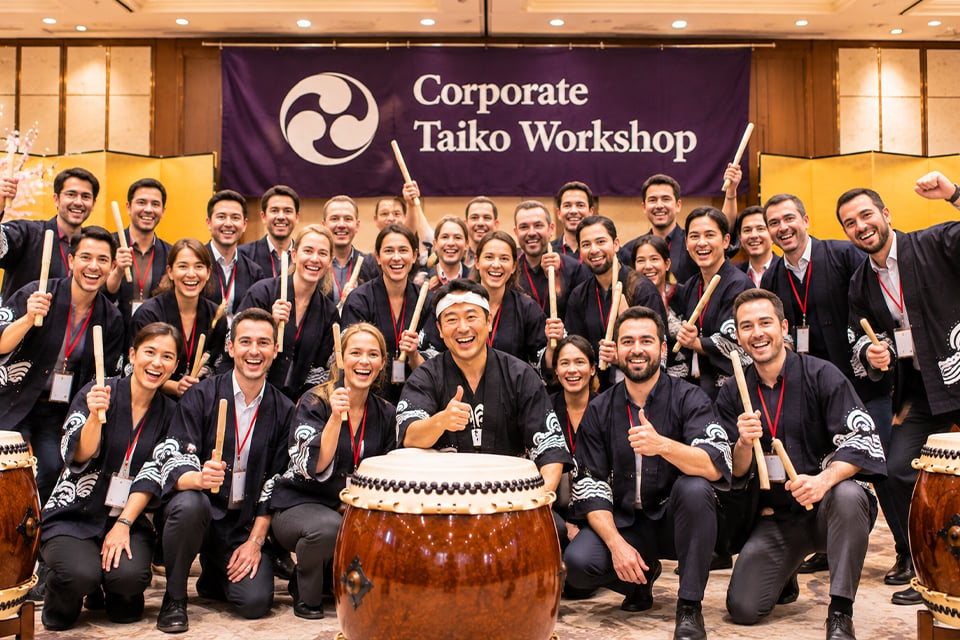
MOTENAS JAPAN helps corporate groups organize customized taiko drumming experiences in Japan, from hands-on workshops to programs combining multiple Japanese cultural activities.
The most suitable format depends on group size, event objectives, venue conditions, and schedule. MOTENAS JAPAN can assist with cultural activities, venue coordination, and language support.
To begin planning, corporate organizers can share their expected participant count, preferred date, location, event purpose, venue preferences, and approximate budget.
Explore MOTENAS JAPAN’s corporate team-building services or request a customized proposal for your event.
We're the editorial team behind MOTENAS JAPAN, a destination management company that plans and delivers cultural experiences, MICE programs, and corporate events across Japan.
Because we plan and deliver these programmes ourselves, our articles are grounded in firsthand operational experience rather than relying solely on external sources.
We regularly update our content to reflect the latest tourism information, cultural insights, and industry best practices.

