





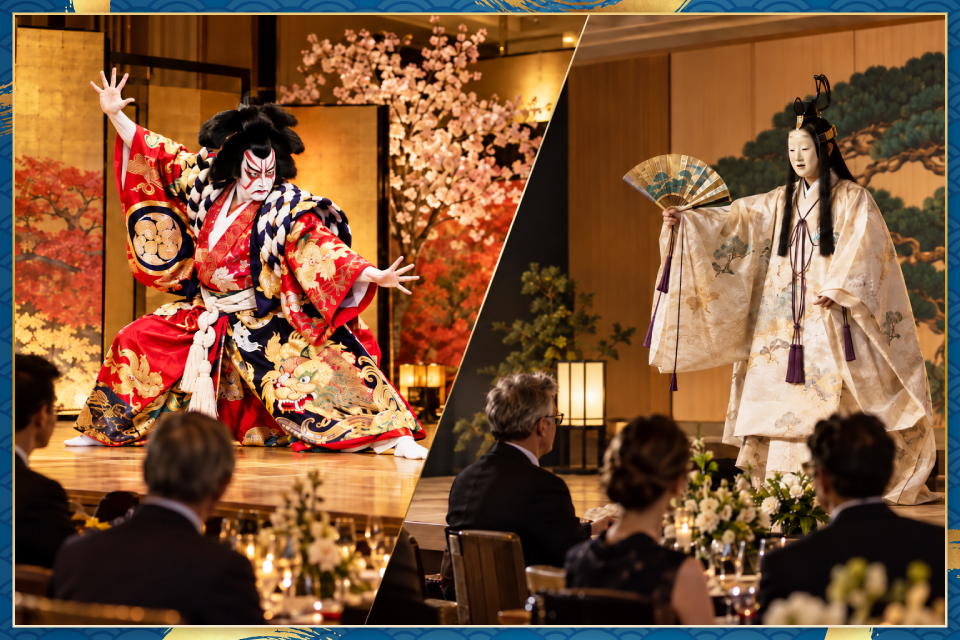

Private Kabuki and Noh performances can bring traditional Japanese performing arts to corporate events, VIP hospitality programs, gala dinners, and cultural receptions.
Depending on the performers, venue, and program requirements, organizers may consider a short stage performance, a cultural demonstration, or an interactive workshop.
Unlike attending a public theater performance, arranging a private program requires coordination between performers, venues, technical teams, and event organizers.
This guide explains how to choose between Kabuki and Noh, compare performance formats, evaluate venue requirements, understand costs, and plan a private cultural program for international corporate guests in Japan.
- Decide whether Kabuki or Noh is better suited to your corporate event
- Compare private performances, cultural demonstrations, and interactive workshops
- Understand performer requirements and performance duration
- Identify venue and technical requirements for hotels and corporate events
- Learn what affects costs and how to request a quotation
- Explore booking procedures and customization options for international VIP guests
Can You Arrange a Private Kabuki or Noh Performance for a Corporate Event?
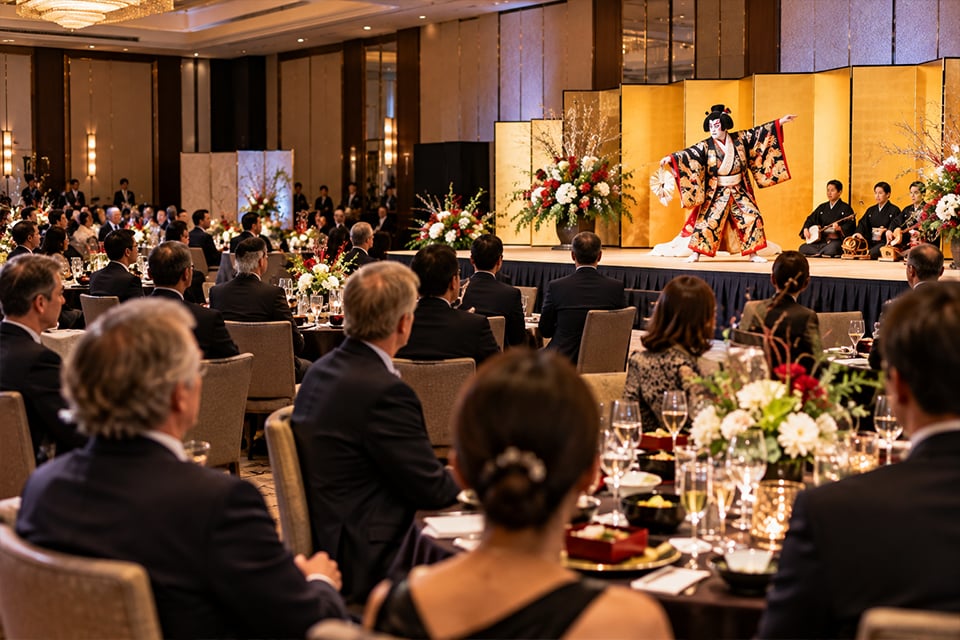
Yes. Private Kabuki experiences and Noh-related performances or educational programs can be considered for corporate audiences. The main decision is whether guests should watch a theatrical presentation, learn about the art form, or participate in a cultural activity.
Short Performances and Private Stage Shows
A private Kabuki program may feature a selected dance or scene, supported by an introduction to its story and characters. MOTENAS JAPAN offers private Kabuki experiences that include a performance and explanations of the art form.
For Noh, Theatre Nohgaku provides two examples of production scale:
- Chamber Recitals: Smaller adaptations of traditional Noh plays, requiring fewer performers and simpler staging.
- Full Performances: Fully staged plays preceded by demonstrations of Noh dance, chanting, and musical instruments.
These are examples from Theatre Nohgaku, an independent organization, rather than programs automatically offered by MOTENAS JAPAN.
Cultural Demonstrations and Interactive Workshops
Demonstrations introduce the techniques behind traditional performances without requiring guests to attend a complete theatrical production.
MOTENAS JAPAN’s Kabuki experience includes explanations of Kabuki history and opportunities to observe performers preparing their makeup and costumes.
Theatre Nohgaku also offers lecture-demonstrations and workshops covering chanting, dance, instruments, and other aspects of Noh.
For a conference or reception with limited time, an introductory presentation may be more practical than a full production.
Sources:
- MOTENAS JAPAN – Kabuki: https://en.motenas-japan.jp/kabuki/
- Theatre Nohgaku – Workshops and Performances: https://www.theatrenohgaku.org/workshops-and-performances
Should You Choose Kabuki or Noh for Your Corporate Event?
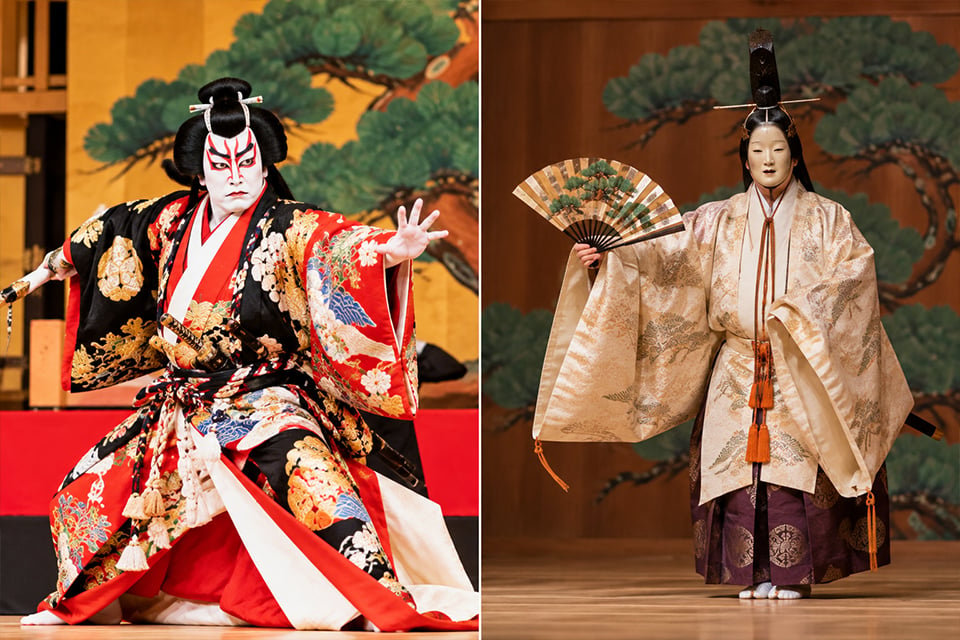
Choose Kabuki for a colorful, expressive presentation; consider Noh for a more contemplative experience centered on symbolism and classical theatrical traditions.
| Consideration | Kabuki | Noh |
| Visual style | Elaborate costumes, dramatic makeup, expressive movement | Masks, refined costumes, restrained movement |
| Atmosphere | Energetic and theatrical | Contemplative and ceremonial |
| Cultural introduction | Characters, makeup, dance, storytelling | Masks, chanting, movement, symbolism |
| Potential event fit | Celebrations, product launches, VIP receptions | Executive hospitality, cultural programs, heritage-focused events |
When to Choose Kabuki
Kabuki is particularly effective when visual impact is a priority. Its expressive acting, distinctive makeup, and elaborate costumes can engage international audiences without extensive prior knowledge of Japanese theater.
A selected dance or theatrical presentation may provide a memorable centerpiece for a corporate celebration or reception.
Learn more about MOTENAS JAPAN’s private Kabuki experience.
When to Choose Noh
Noh is well suited to audiences interested in Japanese aesthetics, history, and classical performing arts.
Its combination of masks, chanting, instrumental music, and controlled movement creates a distinctive atmosphere. A short cultural introduction can help guests recognize the meaning behind gestures and symbolic elements.
For an executive cultural program, Noh may offer a quieter alternative to more visually dramatic entertainment.
Source: Japan Arts Council – Introduction to Nohgaku:https://www2.ntj.jac.go.jp/unesco/noh/en/introduction/
How Many Performers Are Needed, and How Long Does a Performance Last?
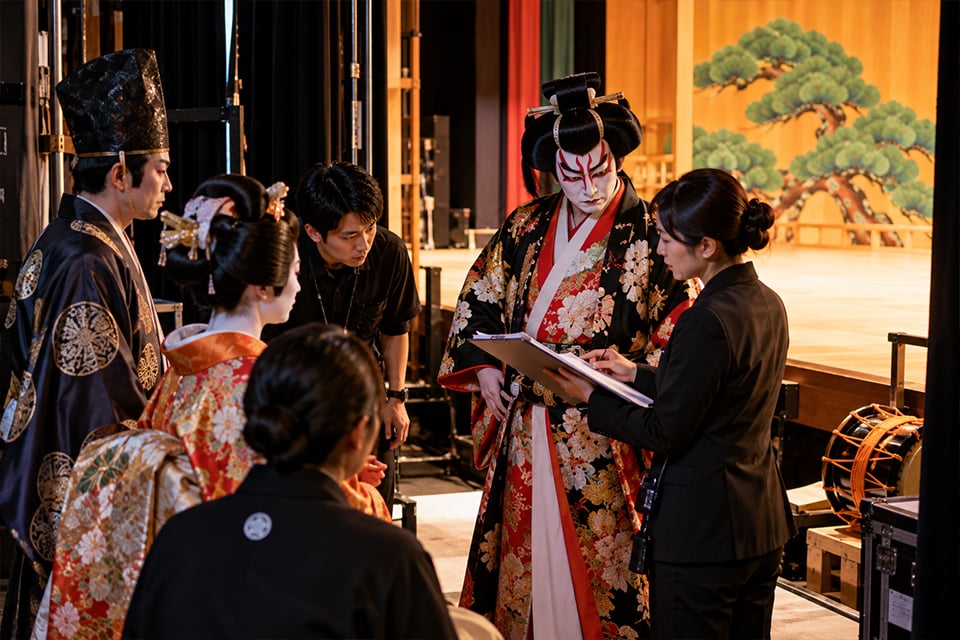
Performer numbers depend on the selected work and production scale. For scheduling purposes, distinguish the time spent watching the performance from the total program duration for guests.
Performer Requirements for Kabuki and Noh
Kabuki may involve actors, musicians, and supporting artists. The lineup depends on the selected scene or dance and whether musical accompaniment is performed live.
Noh traditionally involves the principal performer (shite), other performers, musicians (hayashi), and a chorus (jiutai).
A chamber recital may use fewer artists than a fully staged production. Theatre Nohgaku specifically identifies reduced performer numbers and simpler staging as characteristics of its chamber recitals.
When comparing proposals, check whether musicians and supporting performers are included in the quoted lineup.
Performance Duration and Program Scheduling
MOTENAS JAPAN publishes the following information for its private Kabuki experience:
| Item | Published Kabuki Experience |
| Duration | 1–2 hours |
| Participants | 2–100 people, adjustable upon request |
| Locations | Tokyo, Osaka, Kyoto, and other locations |
| Price | Available upon inquiry |
These are details of a particular published experience, not standard limits for all Kabuki or Noh productions. The participant range refers to guests, not the number of performers.
When building an event schedule, allow for introductions, demonstrations, audience questions, and transitions in addition to stage time.

Sources:
- MOTENAS JAPAN – Kabuki: https://en.motenas-japan.jp/kabuki/
- Theatre Nohgaku – Workshops and Performances: https://www.theatrenohgaku.org/workshops-and-performances
Can Kabuki or Noh Be Performed at Hotels and Corporate Venues?
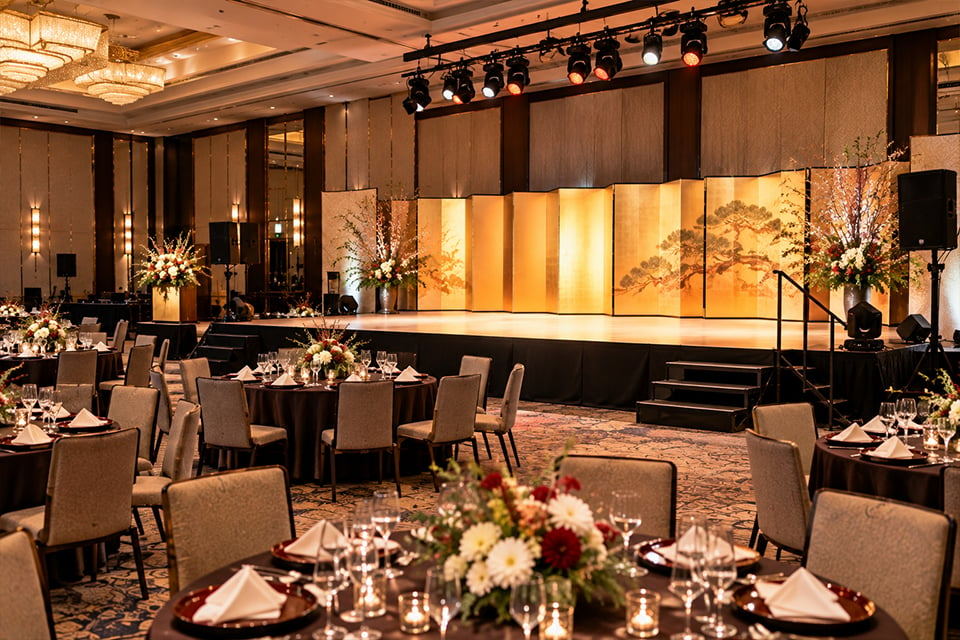
Yes. Selected performances can be considered for hotel ballrooms, corporate event spaces, and dedicated theaters. The venue must support the artistic and technical needs of the proposed production.
Venue and Technical Requirements
Before selecting a location, assess stage dimensions, floor conditions, ceiling height, acoustics, lighting, backstage facilities, and equipment access.
| Venue Type | What to Check | Planning Considerations |
| Hotel Ballroom | Stage area, flooring, ceiling height, sound, lighting, dressing rooms | Coordinate temporary staging and banquet operations |
| Corporate Event Space | Floor space, power supply, acoustics, loading access | Equipment rental or additional staging may be needed |
| Dedicated Traditional Theater | Stage configuration, seating, backstage facilities | Suitable for traditional staging, subject to venue policies |
| Cultural or Multipurpose Venue | Performance area, sound restrictions, equipment access | Match the production to the venue’s permitted uses |
The MOA Museum of Art in Atami offers a useful example of a purpose-built Noh theater. Its published facilities include 501 seats, five backstage rooms, removable stage pillars, and interpretation equipment for up to three languages.
These specifications describe that particular venue, not universal technical standards.
Incorporating Performances into Corporate Dinners
A cultural presentation can open a gala dinner, take place between program segments, or conclude an evening reception.
Three decisions are especially important:
- Timing: Schedule the performance around speeches and food service, avoiding disruptive serving activity during quieter scenes.
- Seating: Check sightlines from dining tables and ensure that guests can see the performance area.
- Movement: Keep service routes clear of performer entrances, exits, and backstage access.
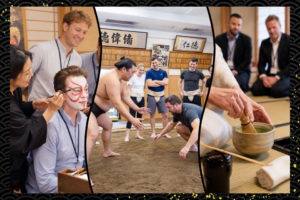
MOTENAS JAPAN’s published corporate Kabuki case demonstrates how a live performance can be incorporated into a dining program.
Sources:
- MOA Museum of Art – Space Rentals: https://www.moaart.or.jp/en/space_rentals/
- MOTENAS JAPAN – Kabuki Case Study: https://en.motenas-japan.jp/report-kabuki/
How Much Does a Private Kabuki or Noh Performance Cost?
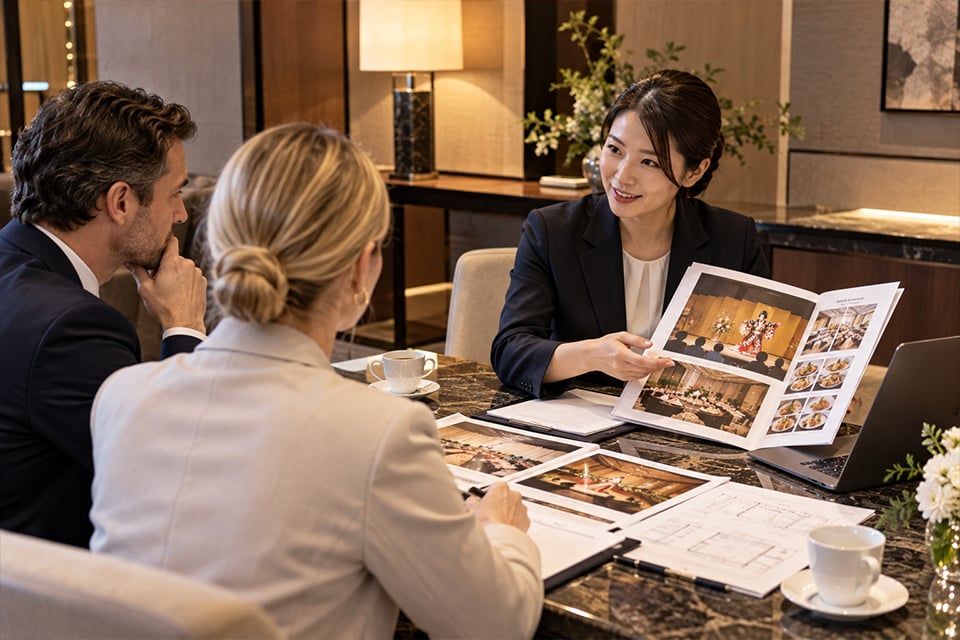
There is no single published price that represents every private Kabuki or Noh production. A corporate quotation should distinguish artistic fees, venue costs, technical production, and event services.
Factors That Affect Performance Costs
The main cost drivers are the number of performers, live musical accompaniment, performance length, rehearsal needs, venue facilities, and transportation.
A hotel ballroom with suitable equipment may involve different expenses from a production requiring a dedicated theater or temporary stage.
For a concrete venue example, the MOA Museum of Art publishes separate rental information for its Noh theater. Venue rental should be considered independently from performer fees and other production expenses.
What to Consider When Planning Your Budget
Compare quotations by their included services, not simply by the total price.
| Cost Component | Questions to Ask Before Booking |
| Performers and Musicians | Does the fee include live accompaniment and supporting artists? |
| Costumes and Preparation | Are costume preparation, makeup, and rehearsals included? |
| Venue and Equipment | Who provides the stage, sound system, and lighting? |
| Transportation | Are travel, accommodation, and equipment delivery included? |
| Interpretation and Operations | Are interpreters, an English-speaking MC, and on-site coordination included? |
| Schedule Changes | What additional charges apply to overtime, changes, or cancellation? |
When requesting quotations, provide the event date, location, guest count, preferred art form, desired program length, venue details, and estimated budget.

Source: MOA Museum of Art – Space Rentals: https://www.moaart.or.jp/en/space_rentals/
How Do You Book a Private Kabuki or Noh Performance in Japan?

Booking a private Kabuki or Noh performance in Japan begins with a clear event brief, followed by an assessment of performer availability, venue suitability, and production logistics.
Establish the event purpose, preferred date, location, guest count, available program time, and estimated budget. These details form the basis of your initial inquiry.
Choose Kabuki or Noh based on your audience and event objectives. Identify whether you want a staged performance, cultural demonstration, or interactive experience.
Review potential performers, venue availability, stage conditions, and any restrictions affecting the proposed production. Confirm whether the venue can accommodate the selected presentation.
Finalize responsibilities for technical equipment, costume preparation, transportation, backstage access, rehearsals, and on-site staffing. Any interpretation or guest participation should also be agreed upon at this stage.
Approve the running order, performance timing, guest seating, introductions, and transitions between activities. For corporate dinners, coordinate the schedule with speeches and meal service.
How Early Should You Book?
There is no universal booking deadline for private Kabuki or Noh performances. Preparation time is influenced by performer schedules, venue availability, and production complexity.
For events with fixed dates, international VIP guests, or specialized staging, early consultation allows more time to evaluate suitable options.

Can Performances Be Customized for International VIP Guests?
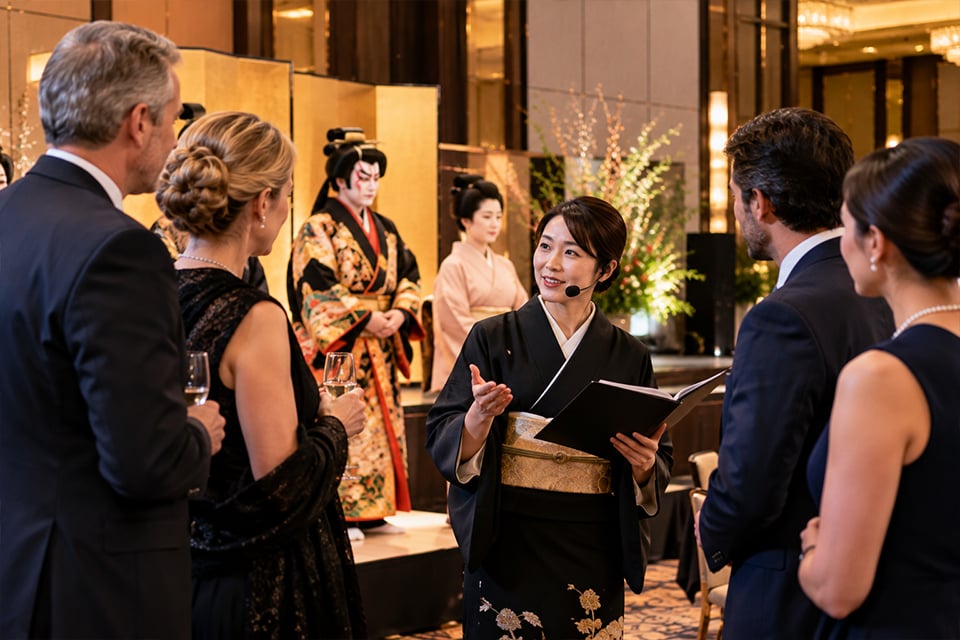
Yes. Private Kabuki and Noh programs may be adapted for international VIP guests through English-language support, cultural introductions, and selected interactive activities.
The goal is to make traditional Japanese performing arts accessible while respecting their artistic traditions.
English Explanations and Cultural Interpretation
International guests may be unfamiliar with the stories, gestures, and symbolism used in Kabuki and Noh. A brief introduction can help them appreciate the performance without requiring prior knowledge of Japanese theater.
Possible support includes:
- English-Speaking MC: Introduces the program, performers, and cultural background.
- Cultural Interpretation: Explains key theatrical elements, such as Kabuki makeup or Noh masks.
- Translated Program Notes: Provides background information that guests can refer to during the event.
For corporate hospitality programs, these additions can help connect the cultural experience with the event’s overall purpose.
Performance Customization and Guest Interaction
Depending on the artists and selected program, a private experience may include a performer Q&A, a supervised cultural demonstration, or an opportunity to take commemorative photographs.
Some corporate events may also explore ways to reflect their brand identity or event theme through introductory commentary or selected presentation elements.
However, changes to traditional works, costume handling, photography, and guest participation require approval from the performers and production team.
MOTENAS JAPAN has previously coordinated a customized Kabuki experience for an overseas corporate event. The following case study illustrates how cultural presentation and corporate objectives were brought together.

How Has MOTENAS JAPAN Arranged Kabuki for Corporate Events?
MOTENAS JAPAN organized a customized Kabuki experience for an overseas company’s new product promotion event, incorporating traditional Japanese performing arts into a hospitality program for international corporate guests.
The program took place at Meguro Gajoen in Tokyo and reflected the client’s interest in Japanese culture, visual presentation, and corporate identity.
Key elements included:
- Customized Red Lion Performance: A red lion was selected instead of the traditional white lion to connect the presentation with the client’s concept.
- Tailored Cultural Lecture: Explanations of Kabuki history, movement, and color symbolism were adapted to reflect the company’s philosophy.
- Kumadori Demonstration: International guests observed traditional Kabuki makeup, with volunteers experiencing the makeup process.
- Lunch and Performance: Guests enjoyed a live Kabuki presentation during a Japanese dining experience.
- English-Language Hospitality: An English-speaking MC, printed materials, and bilingual support helped guests follow the program.
After the Kabuki experience, guests traveled to the company’s headquarters event. MOTENAS JAPAN also coordinated a subsequent dinner reception, including seating and dietary adjustments.
The case demonstrates how a private cultural experience can support a wider corporate itinerary rather than function as standalone entertainment.
Source: MOTENAS JAPAN – Kabuki Experience for Overseas Corporate VIPs: https://en.motenas-japan.jp/report-kabuki/
Frequently Asked Questions About Private Kabuki and Noh Performances

Can Private Performances Be Arranged for Small VIP Groups?
Yes. MOTENAS JAPAN’s published Kabuki experience accommodates groups starting from two guests, with adjustments available upon request.
For small VIP groups, an intimate cultural demonstration or selected performance may be more suitable than a large theatrical production. Noh-related opportunities should be assessed individually based on the proposed experience and performer availability.
Can Guests Take Photos with Kabuki or Noh Performers?
Photography may be possible with advance permission from the performers and organizers.
Confirm whether guests can take photographs during the performance, participate in a dedicated photo session, or use images for corporate communications. Filming and commercial photography may require separate approval.
Can Kabuki or Noh Be Combined with Other Japanese Cultural Experiences?
Yes. A private cultural program may be combined with Japanese dining, a tea ceremony, or another traditional activity.
For corporate events, combining experiences can create a more comprehensive introduction to Japanese culture. Allow sufficient time for each activity and plan transitions carefully to maintain a comfortable schedule for guests.
Source: MOTENAS JAPAN – Kabuki: https://en.motenas-japan.jp/kabuki/

Plan Your Private Kabuki or Noh Performance with MOTENAS JAPAN
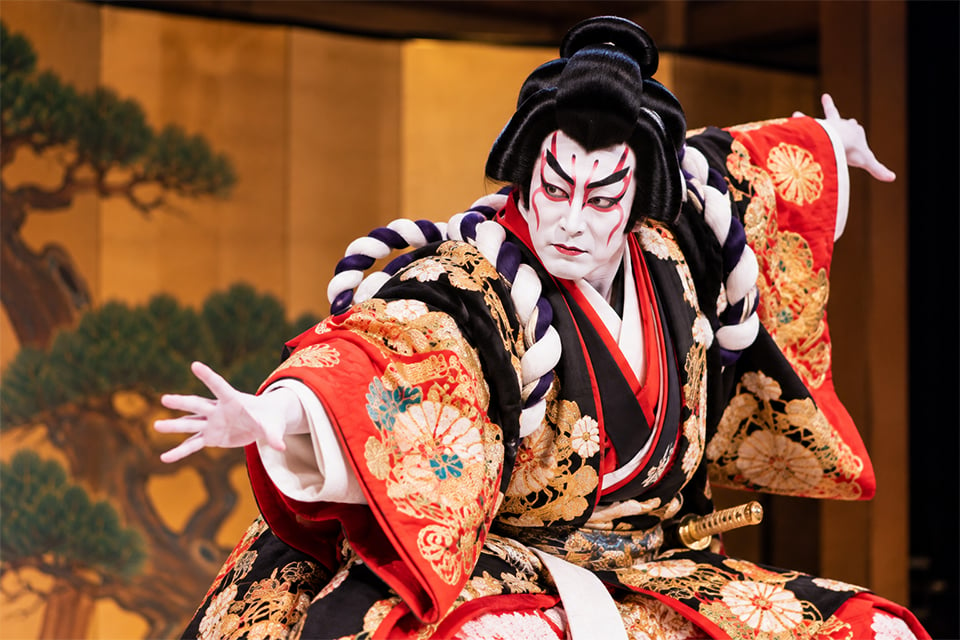
Bring traditional Japanese performing arts to your next corporate event, gala dinner, or VIP hospitality program in Japan.
Share your preferred date, location, guest count, event objectives, and estimated budget with MOTENAS JAPAN. Our team can help you explore private Kabuki experiences and discuss the feasibility of Noh-related programs suited to your event.

毎月1回以上国内・海外旅行をする旅好きライターです。
フランス・ベトナム一人旅を筆頭に、ひとりで美味しいものを食べながらゆったり旅をするのが好きです。

